Nearly 160 Modules Installed for a 5,500-Square-Metre UK Community Diagnostic Centre
Mid and South Essex NHS Foundation Trust
Q1: What is the scale of the modular diagnostic centre?
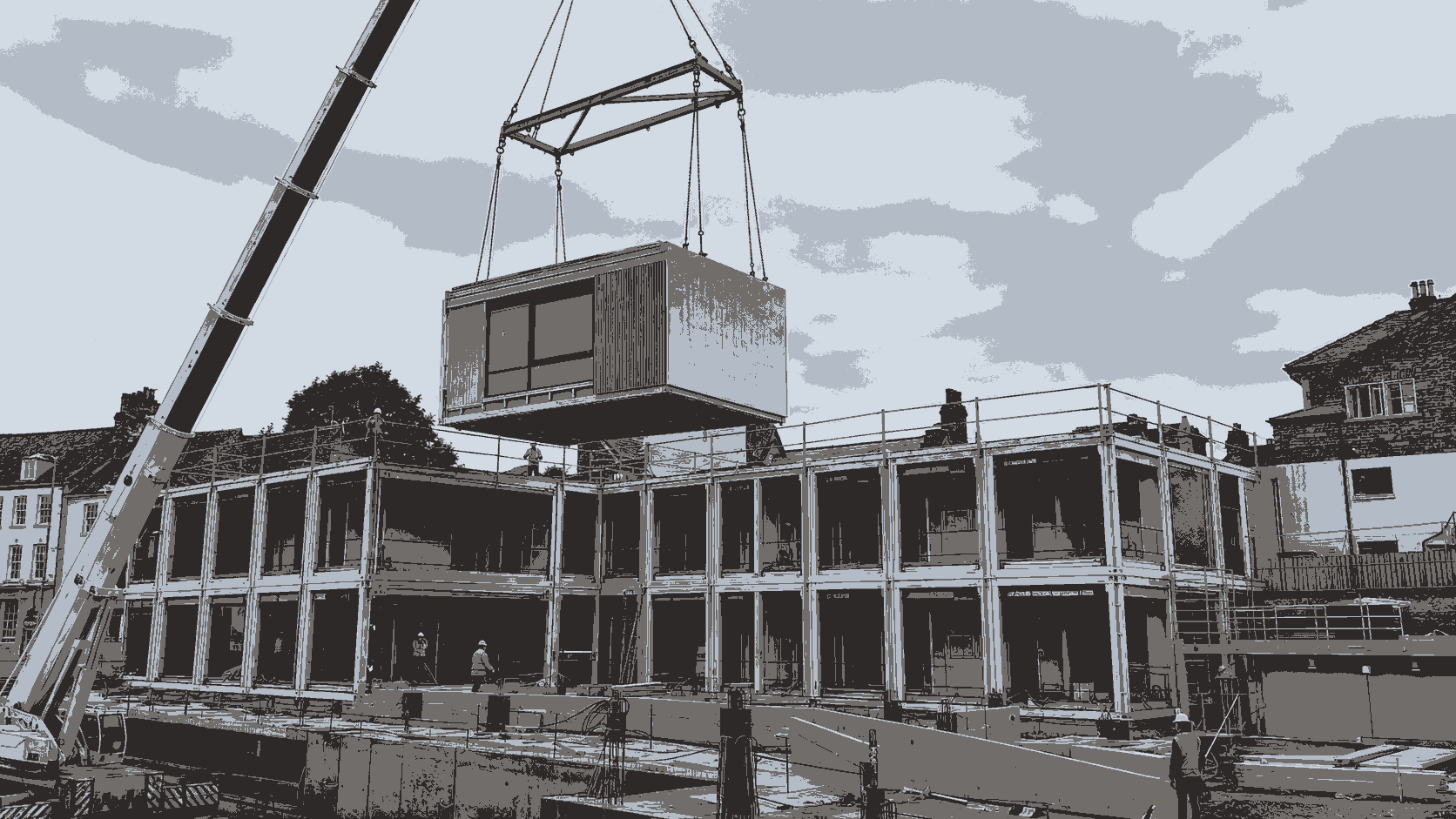
The development is located in Pitsea town centre in Essex, England. Its main structure comprises approximately 159 steel modules forming a two-storey building of around 5,500 square metres. The modules were transported to site and installed by crane over approximately six weeks, creating the primary structure for the next phases of enclosure and fit-out. Rather than serving as a small single-purpose clinic, the building will combine medical imaging, endoscopy, blood testing, community activities and library services. The latest NHS update indicates that the centre is expected to open in summer 2027 and provide approximately 120,000 additional appointments each year.
Q2: Why is modular construction suitable for a diagnostic centre?
Community diagnostic centres contain repeated consultation rooms, circulation areas, technical spaces and building-service systems that can benefit from standardized factory production. On this project, structural modules were manufactured while demolition, foundations and other site work progressed. Some electrical and mechanical service units are also being assembled and tested away from the site. This allows several stages of the programme to proceed in parallel and reduces material storage and construction activity in the town centre. However, MRI, CT and endoscopy facilities require specialized room dimensions, equipment routes, vibration control, electrical capacity and shielding, so conventional office modules cannot be used without healthcare-specific engineering.
Q3: What requirements do medical systems place on the modules?
Large imaging equipment introduces significant floor loads and requires careful control of structural movement and vibration. MRI areas may need radio-frequency shielding, controlled safety zones and dedicated cooling, while CT and X-ray rooms require radiation protection designed to local regulations. Endoscopy departments need suitable decontamination arrangements, separation of clean and used equipment, ventilation and medical-service connections. Openings, cable routes, pipework and maintenance access must be coordinated with the final equipment before manufacturing. Late equipment changes can affect fire protection, waterproofing, shielding and structural performance, making early design coordination particularly important.
Q4: Does completion of module installation mean the centre is ready to open?
Completion of the modular structure is an important construction milestone, but the building is not yet ready to receive patients. The project still requires its façade, roof waterproofing, module-joint completion, internal finishes, equipment bases, main service connections, fire systems, shielding and public spaces. Once MRI, CT and endoscopy equipment has been installed, specialist commissioning, electromagnetic or radiation-safety checks, infection-control reviews and integrated building testing must be completed. The planned summer 2027 opening demonstrates that medical fit-out and commissioning remain substantial phases even after the modules form a weather-resistant structure.
Q5: What does the project mean for Chinese modular-building exporters?
The project demonstrates that demand for modular healthcare construction extends beyond temporary clinics into large facilities intended for long-term community use. Chinese suppliers entering this market need verified structural, fire, thermal and MEP systems, together with the ability to coordinate interfaces around specific medical equipment. English BIM models, material certification, factory testing records, transport planning and installation documentation will also be required. Suppliers without complete healthcare-project experience may enter more safely by providing standard consultation rooms, administrative spaces, community rooms or certified structural modules, while local specialists deliver imaging, shielding and clinical systems.
For Chinese modular-building companies, healthcare projects require more than experience in manufacturing building shells. Competitive capability depends on early equipment coordination, factory testing, precise interfaces, compliant documentation and commissioning support. Suppliers should clearly define the boundary between standard accommodation areas and specialist clinical zones to avoid taking responsibility for systems outside their technical control.
Related News

Module Installation Begins on Australia’s 20-Storey Student Housing Project with 528 Units
2026-07-31
Read More
Prefabricated Modular AI Data Center Integrates IT, Power and Cooling Systems for Faster Deployment
2026-07-31
Read More