Japan Develops Modular Construction Method for Large Data Centers, Targeting a 50% Shorter Delivery Cycle
Official development announcement
Question 1: Why is Japan developing a modular construction method for data centers?
The expansion of artificial intelligence, cloud services and high-performance computing is increasing demand for large data centers. Conventional projects usually proceed through design, permitting, civil construction and mechanical and electrical installation in sequence, resulting in long delivery schedules. Labor shortages, complicated system interfaces and inconsistent project quality can create additional delays.
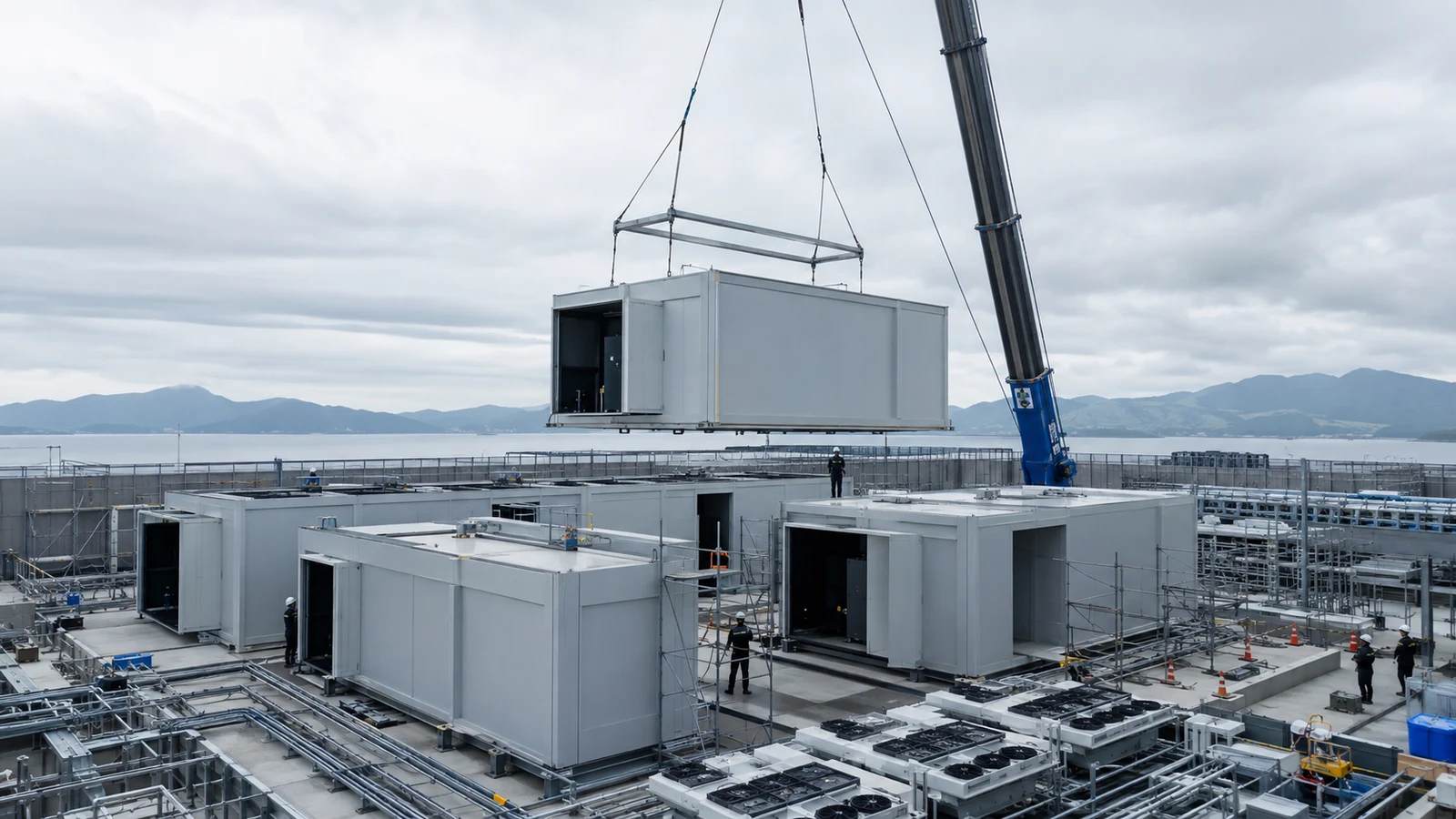
Modular construction transfers part of the on-site workload into a controlled factory environment. Building units, electrical equipment, cooling pipes and related systems can be produced and tested while foundation work proceeds at the destination. This can reduce sequential waiting time, although land availability, grid connections, permits and equipment supply will continue to affect the final schedule.
Question 2: How is this different from a conventional containerized data center?
A containerized data center normally integrates servers, electrical equipment and cooling systems into one or several transportable enclosures. It is frequently used for edge computing, temporary capacity or relatively small expansions. The Japanese development targets facilities in the tens-to-hundreds-of-megawatts range and may modularize the building, power distribution, cooling systems and utility infrastructure.
The approach is therefore closer to assembling a complete facility from standardized building modules than simply placing servers inside shipping containers. Foundations, fire protection, security, grid infrastructure and long-term maintenance planning are still required. Modular construction does not remove the engineering or regulatory obligations associated with a permanent data center.
Question 3: How could the delivery cycle be reduced by up to approximately 50%?
Conventional projects contain multiple stages that must often be completed sequentially. Standardized designs and off-site manufacturing allow building and service modules to be produced while foundations and site infrastructure are being prepared. After delivery, standardized interfaces can simplify lifting, connection, commissioning and inspection.
The approximately 50% reduction is an upper development target, not a guaranteed result for every facility. Lengthy approvals, insufficient grid capacity, transport restrictions or extensive customization could reduce the time advantage. Project assessments should therefore separate factory production, on-site installation and utility connection schedules.
Question 4: What engineering advantages could modular data centers provide?
A factory environment can support repeatable manufacturing processes, dimensional control and systematic quality inspections while reducing exposure to adverse weather. Standardized modules may also allow operators to add computing, electrical and cooling capacity in phases, aligning initial investment more closely with actual demand.
However, greater standardization makes early interface coordination essential. Structural loads, fire compartments, piping connections, liquid-cooling systems, seismic requirements and maintenance access must be resolved before production. Poorly coordinated interfaces can cause site rework and eliminate much of the time saved through prefabrication.
Question 5: What does this trend mean for Chinese modular-building exporters?
The development indicates that international demand for prefabricated construction is expanding beyond accommodation, offices and temporary facilities into advanced digital infrastructure. Chinese suppliers may find opportunities in equipment enclosures, modular data halls, maintenance corridors, auxiliary control rooms and supporting buildings, but these applications require tighter structural tolerances, documented fire performance and comprehensive quality traceability.
Exporters should provide structural calculations, material certificates, fire-test records, welding documentation, interface drawings and transport plans that comply with destination-market requirements. Where electrical or cooling systems are involved, cooperation with qualified specialist integrators is essential, and contracts should clearly allocate responsibility for factory testing, site commissioning and final performance.
Related News
Rapidly Assembled Research Facility Opens on Remote Japanese Island with Independent Power, Communications and Emergency Shelter Functions
2026-08-06
Read More
Indonesia Accelerates Construction of 1,301 Post-Disaster Modular Homes in Aceh and North Sumatra
2026-08-06
Read More