What Is Hot-Dip Galvanizing and Why Is It Important for Modular Steel Buildings?
American Galvanizers Association (AGA)
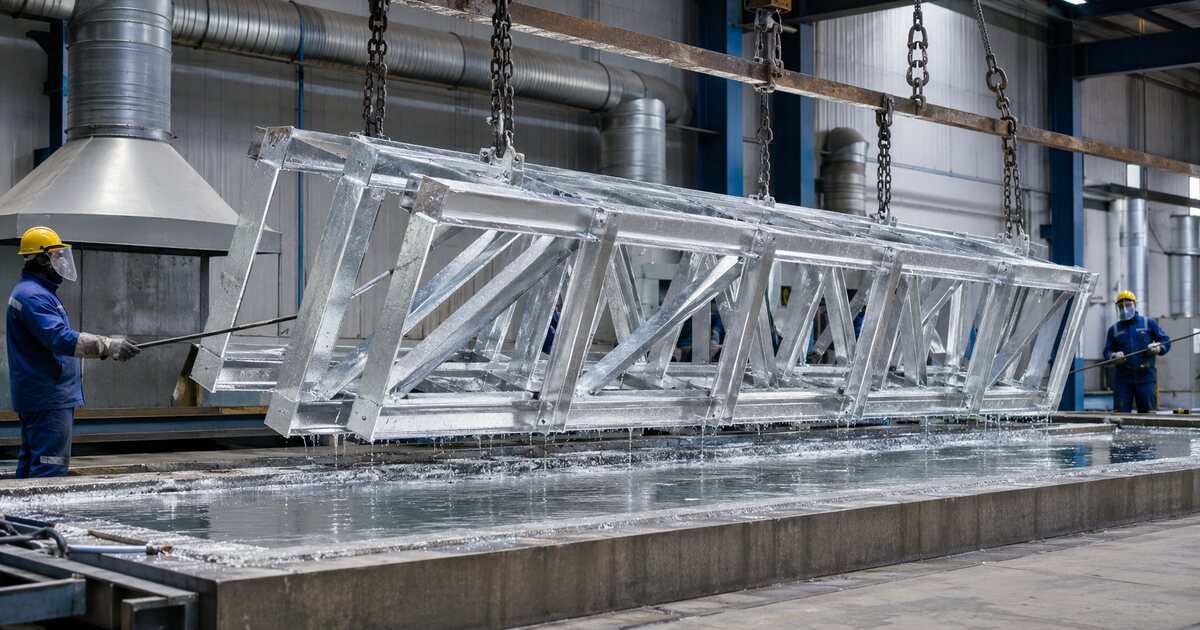
Hot-Dip Galvanizing involves cleaning steel components, removing surface contaminants, applying a flux treatment, immersing the steel in molten zinc, and allowing the coating to cool. The resulting zinc layer forms a metallurgical bond with the steel, providing durable corrosion protection.
Key benefits include:
- Enhanced corrosion resistance;
- Extended service life;
- Reduced maintenance requirements;
- Suitable for outdoor and harsh environments;
- Uniform coating quality;
- Efficient large-scale factory production.
In modular buildings, HDG is commonly applied to structural frames, connection components, platforms, stair systems, railings, and other exposed steel elements.
Frequently Asked Questions (FAQ)
Q1: What is Hot-Dip Galvanizing?
Hot-Dip Galvanizing is a process in which steel is immersed in molten zinc to create a protective coating against corrosion.
Q2: Why is HDG important in modular construction?
It improves corrosion resistance, increases structural durability, and reduces long-term maintenance, especially in outdoor and corrosive environments.
Q3: Which modular building components are commonly galvanized?
Structural steel frames, beams, columns, stairs, platforms, railings, support brackets, and connection components are commonly protected using HDG.
Q4: What do international buyers usually evaluate?
International buyers typically evaluate coating thickness, coating uniformity, surface finish, adhesion quality, corrosion resistance, manufacturing consistency, and compliance with international galvanizing standards.