Life Cycle Assessment (LCA) Supports Sustainable Development in Modular Construction
International Organization for Standardization (ISO)

Life Cycle Assessment (LCA) is an internationally recognized methodology used to evaluate the environmental impacts associated with products and buildings throughout their entire lifecycle. The framework defined by ISO 14040 and ISO 14044 considers resource consumption, greenhouse gas emissions, water use, waste generation, and other environmental indicators.
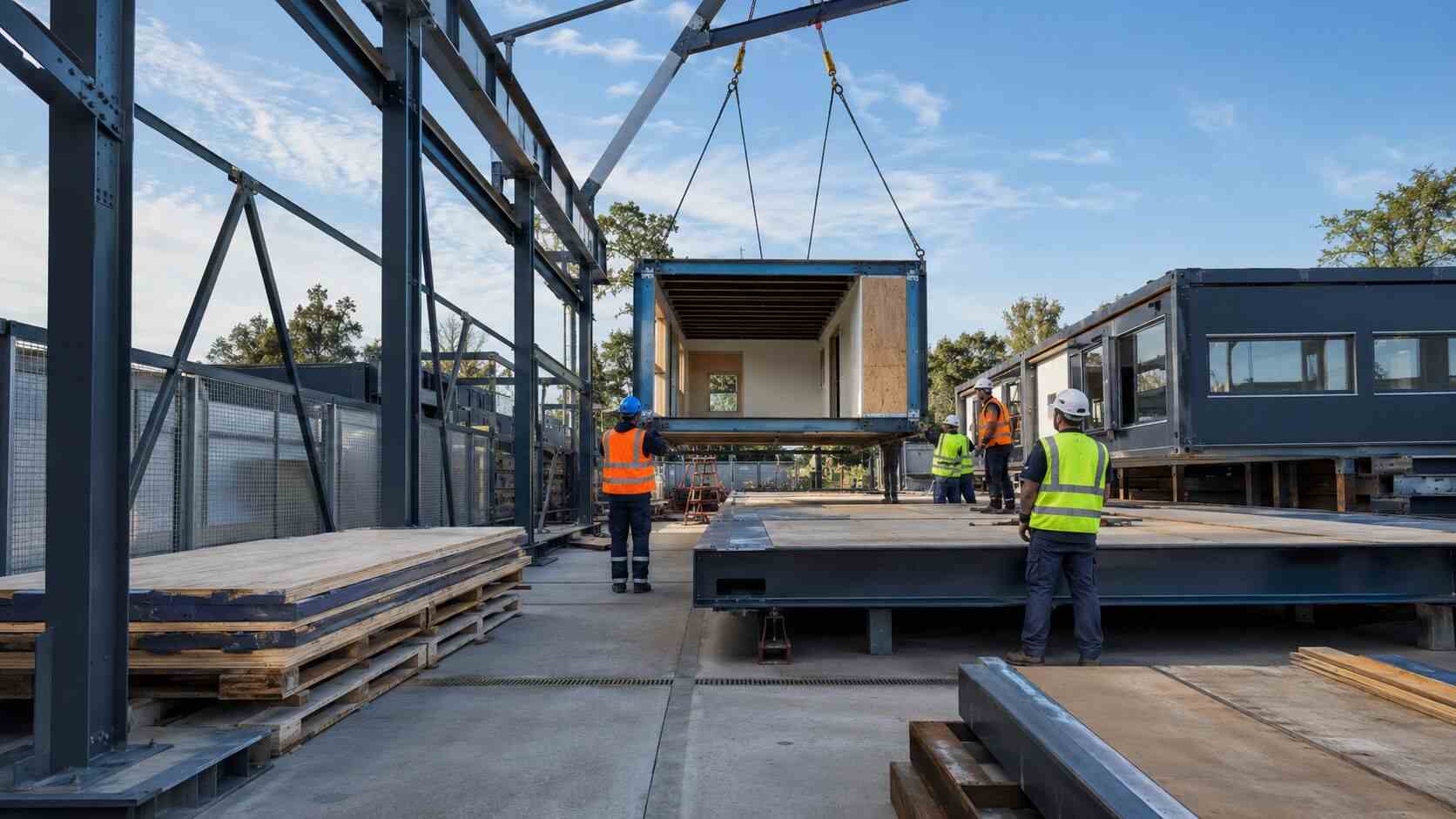
In modular construction, LCA can be applied during the design phase to compare structural systems, building materials, manufacturing methods, transportation strategies, and construction processes. These assessments help project teams make informed decisions that balance environmental performance, technical requirements, and project costs.
LCA also supports sustainability reporting, green building certification, public procurement requirements, and long-term carbon reduction strategies. As BIM and digital engineering technologies continue to evolve, lifecycle assessments are becoming more integrated into modern project workflows.
Frequently Asked Questions (FAQ)
Q1: What is Life Cycle Assessment (LCA)?
Life Cycle Assessment (LCA) is a scientific method used to evaluate the environmental impacts of a product or building throughout its entire lifecycle, from raw material extraction to disposal or recycling.
Q2: Why is LCA important for modular construction?
LCA helps designers and manufacturers compare alternative materials and construction methods, identify opportunities to reduce environmental impacts, and support more sustainable project decisions throughout the building lifecycle.
Q3: What should international buyers pay attention to?
Buyers should understand whether lifecycle assessments follow recognized international standards, which lifecycle stages are included, how environmental data is verified, and whether the assessment supports local sustainability requirements.
Q4: What are the future trends?
Future developments include integrating LCA with BIM, using automated environmental analysis tools, expanding digital material databases, and incorporating lifecycle performance into procurement and investment decisions.



 Supports Sustainable Development in Modular Construction)