Modular Solar Farm Operations and Maintenance Hub for Remote Arizona
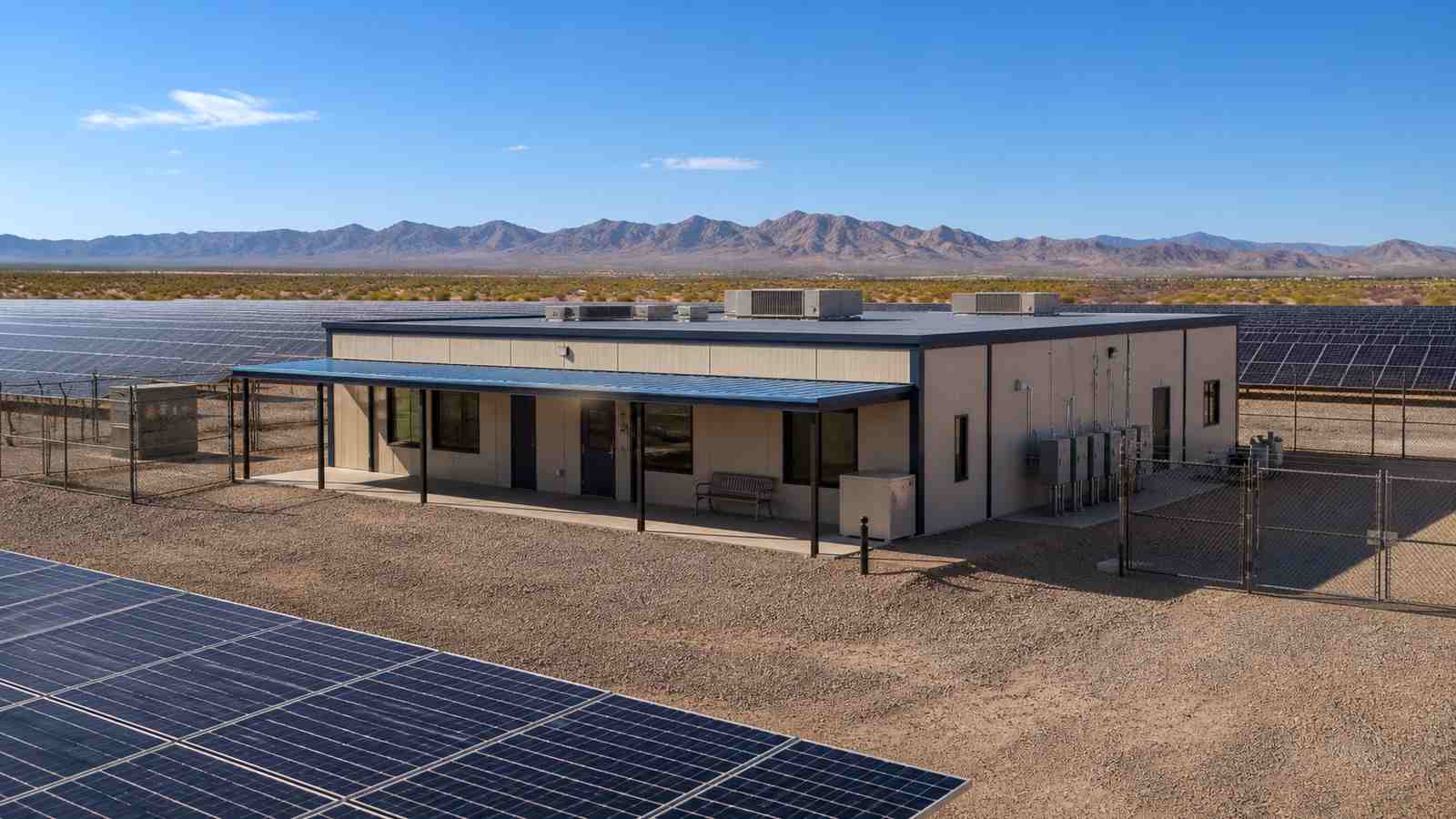
Photo Gallery
Project Overview
What is the proposed project configuration?
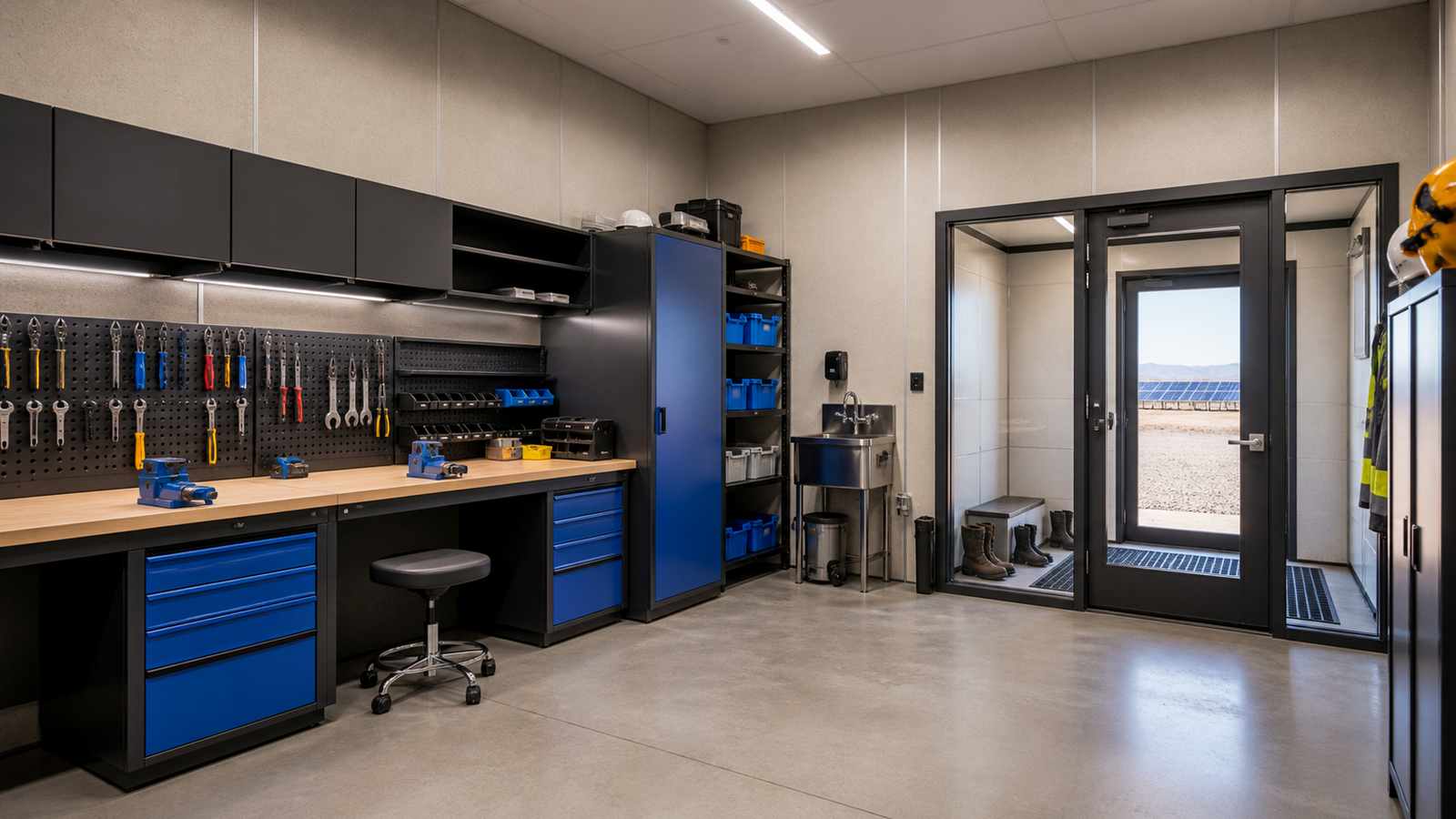
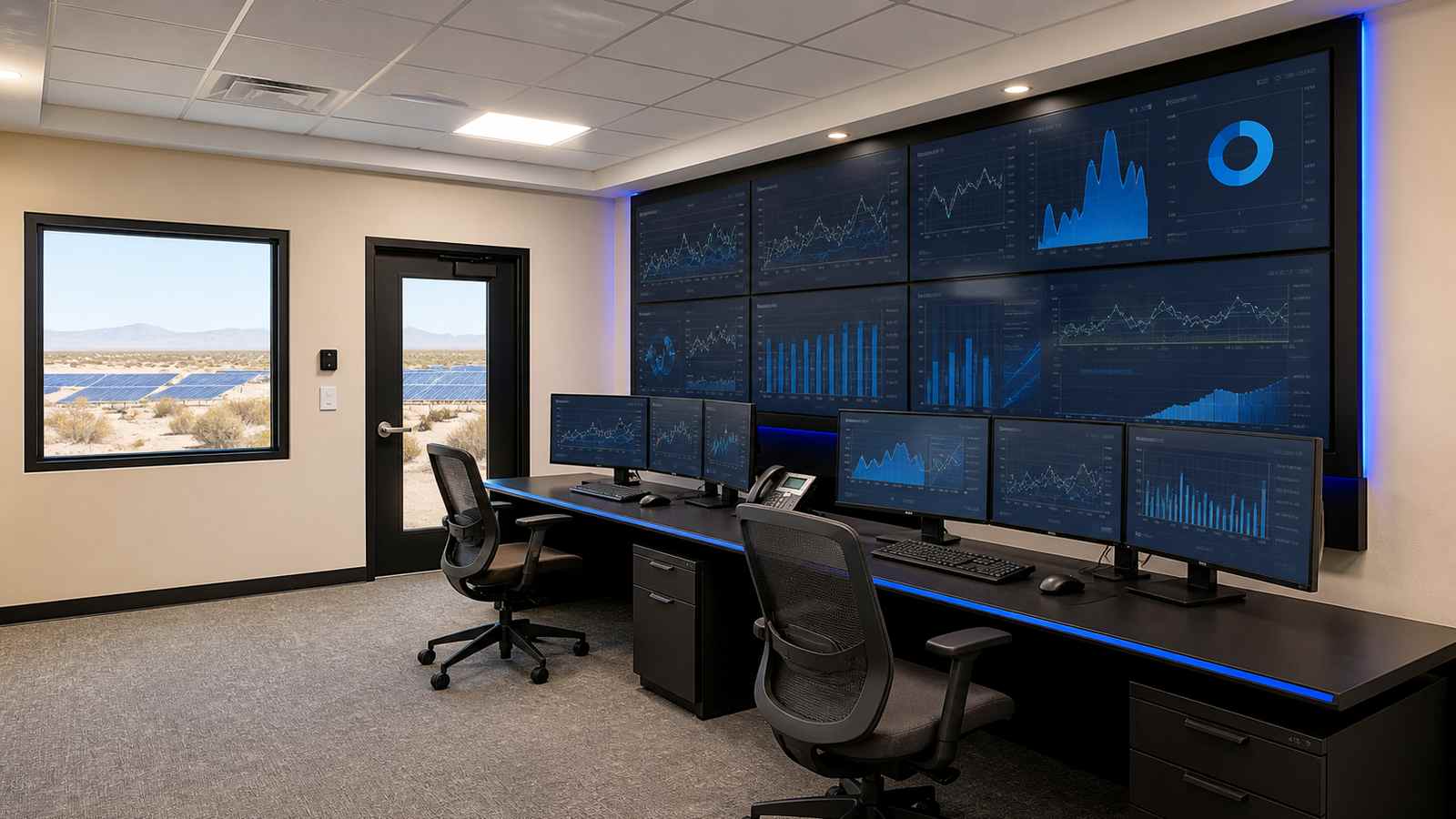
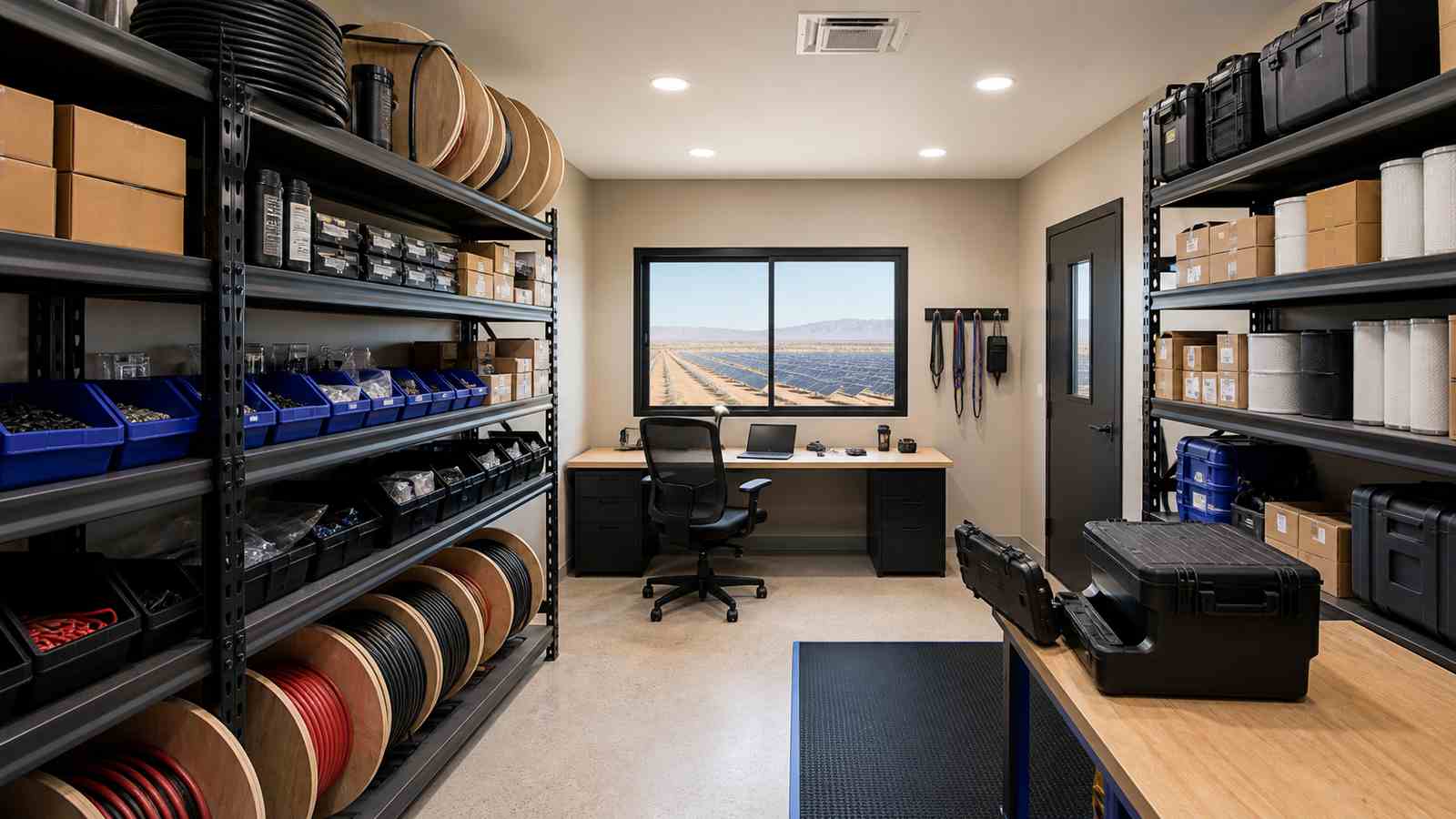
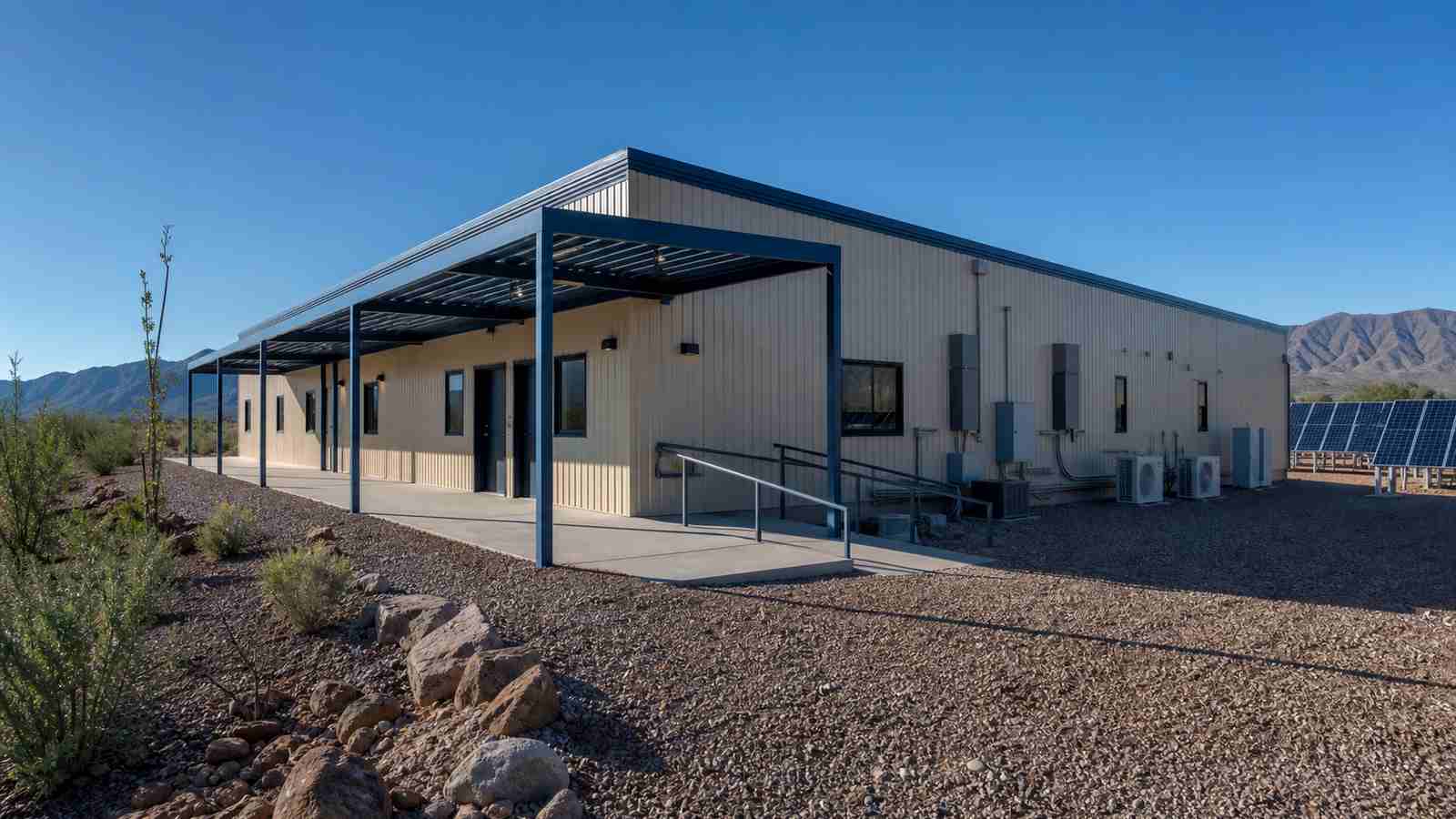
Direct answer: The project brief proposes a modular operations and maintenance hub for a remote photovoltaic plant in Arizona. The configuration combines a monitored control room, technician office, meeting and welfare space, compact workshop, secure spares storage and protected external service areas.
This is a project configuration, not a claim of a named completed contract. Final module dimensions, occupancy, structural actions, fire strategy, electrical classification, HVAC loads, equipment quantities and completion dates must be confirmed using surveyed site data, authority requirements and signed project documents.
Project Features
Solar-ready, dust-resistant, expandable, secure, and maintenance-focused.
Operational Layout and Buyer Brief
How should control, office and workshop functions be separated?
Direct answer: Separate clean control and office areas from tool storage, battery handling, dusty maintenance work and external equipment routes. Access control should allow authorized technicians to reach spares and workshop zones without passing through the control room.
What information should be frozen before production?
Direct answer: Freeze staffing, shift patterns, workstation count, monitoring hardware, server and communications loads, tool inventory, spares volume, welfare needs, vehicle access and future expansion. These inputs determine module sizes, cooling loads, electrical distribution and safe circulation.
Solar O&M and Electrical Safety
What operational data should the hub support?
Direct answer: The hub should support secure monitoring, alarm review, work-order control, maintenance records, weather data and controlled storage of passwords and essential files. The U.S. Department of Energy's PV operation and maintenance guidance emphasizes preventive maintenance, performance monitoring, information management and plans for severe weather and recovery.
How should electrical risks affect the building layout?
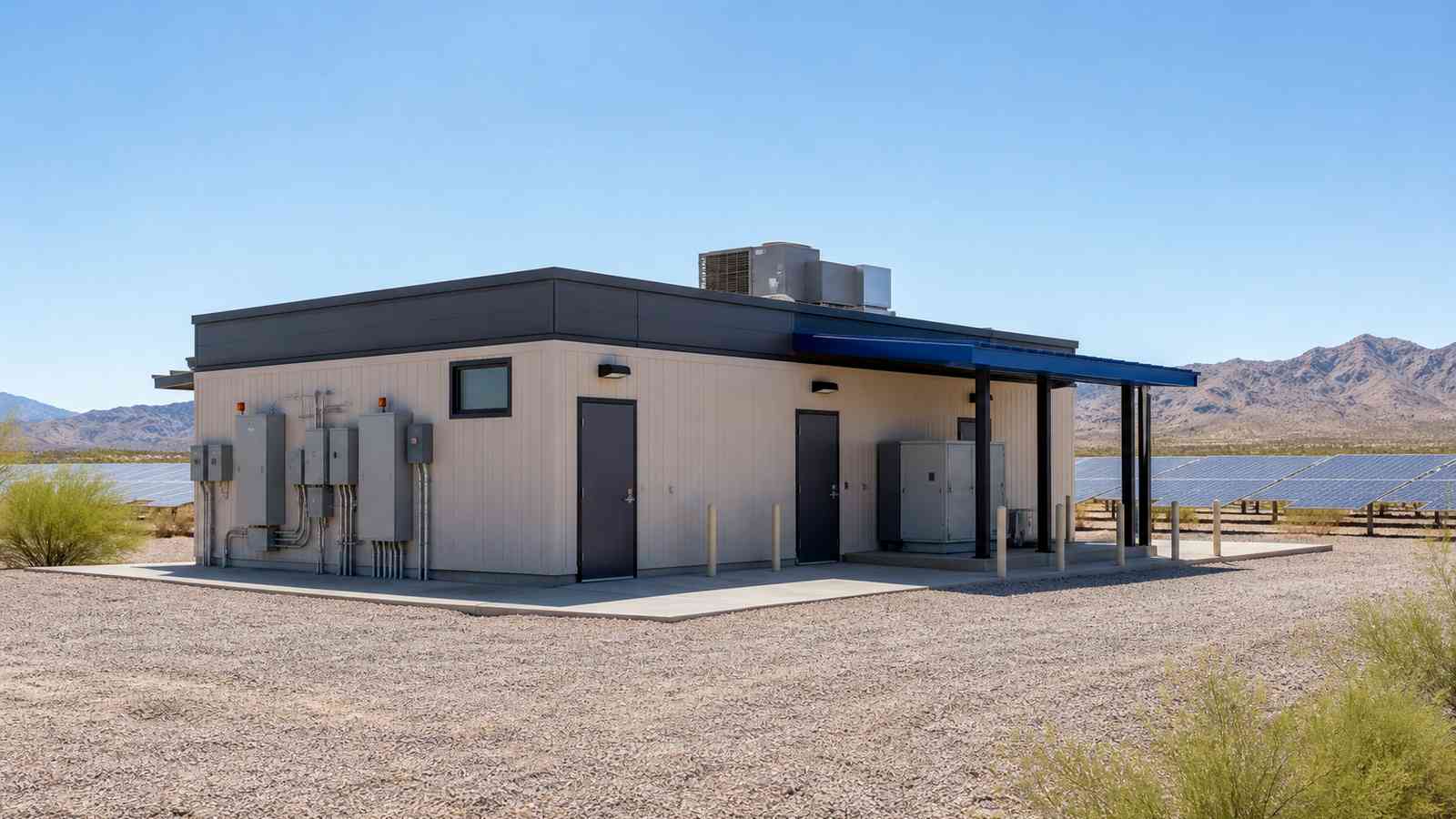
Direct answer: Define isolation points, restricted zones, arc-flash boundaries, grounding, emergency shutdown, fire detection, ventilation and separation of energized work from normal office occupancy. OSHA's electrical safety resources provide a useful regulatory baseline, while the final design must follow the adopted codes and authority requirements for the Arizona site.
Hot-Climate, Dust and Weather Resilience
How should the modules respond to desert conditions?
Direct answer: Confirm design temperatures, solar exposure, wind, dust, rainfall, flood routes and corrosion conditions before structural and HVAC release. Use shaded entrances, protected condensers, maintainable filtration, sealed service penetrations and finishes suitable for repeated cleaning.
The Department of Energy's PV installation and commissioning guidance highlights cable management, rated equipment, weather resilience and commissioning checks. These principles should be coordinated with the modular building's penetrations, service routes and maintenance access.
Factory Quality and Site Installation
Which records should follow each module?
Direct answer: Link the module serial number to approved drawings, structural connections, materials, insulation, air-sealing, fire-stopping, wiring tests, HVAC checks, finishes, lifting points and packing records. Concealed work should be photographed and accepted before closure.
What must be ready before dispatch?
Direct answer: Confirm foundations, anchors, delivery routes, crane positions, laydown space, utility stubs, communications, installation labour, weather windows and secure storage. The site team should receive an installation sequence and a method for documenting transit damage before assembly.
Commissioning and Handover
How should the buyer accept the completed hub?
Direct answer: Test power, grounding, HVAC, filtration, alarms, lighting, communications, access control and monitoring interfaces under normal and backup conditions. Handover should include as-built drawings, asset registers, test certificates, spare filters and parts, maintenance manuals, training and a defects process.
Related ZH-ENG Modular Solution
What should the buyer include in an inquiry?
Direct answer: Provide the site coordinates, climate basis, staffing plan, room schedule, equipment and electrical loads, communications architecture, fire and approval strategy, logistics route and installation boundary. This information allows the modular grid and supply scope to be evaluated without treating preliminary performance as final.
Buyers can review ZH-ENG modular building solutions and use the brief to request a project-specific renewable-energy operations facility.