Modular Workshop and Spare Parts Warehouse for a Copper Mine Expansion in Chile
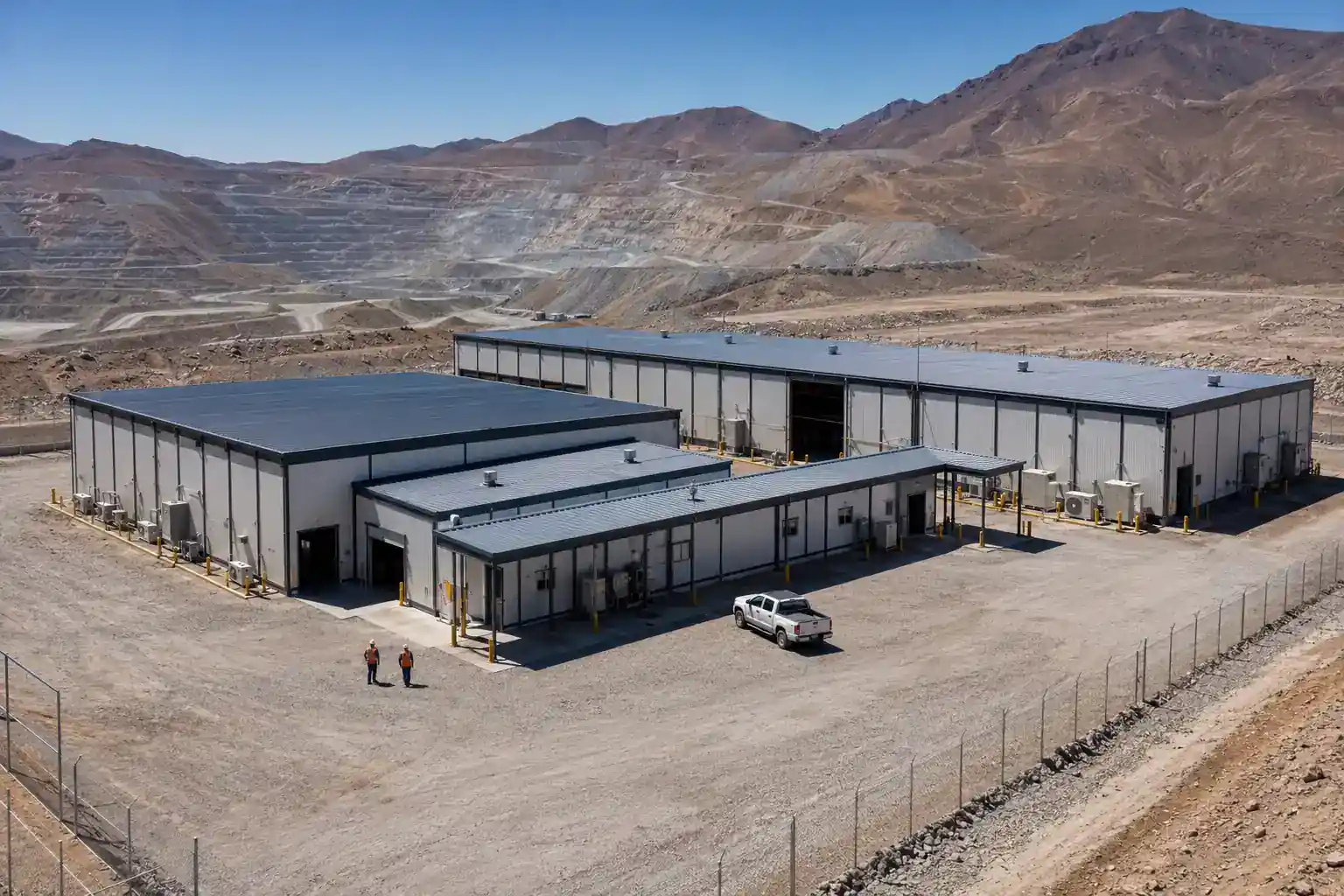
Photo Gallery
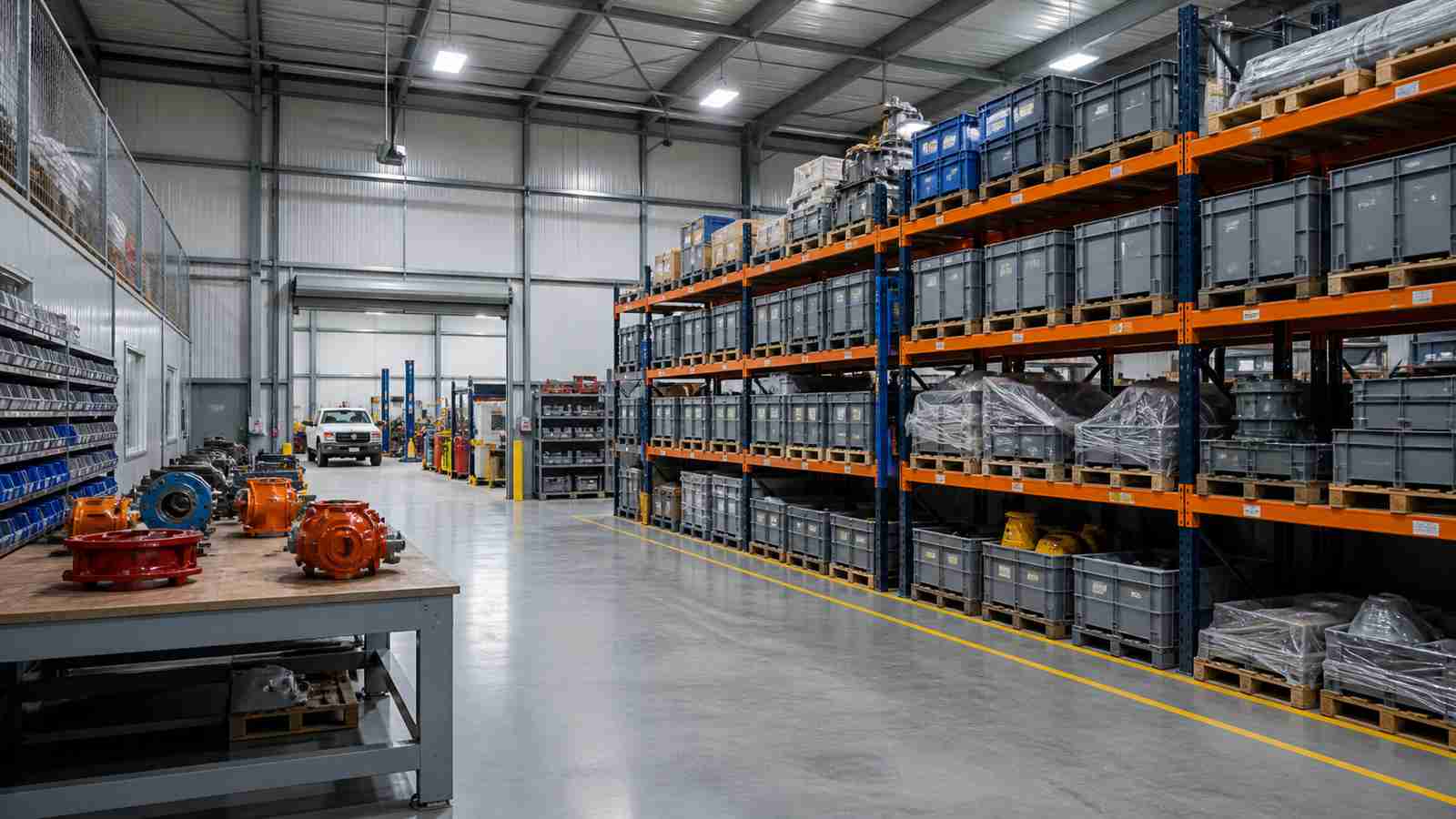
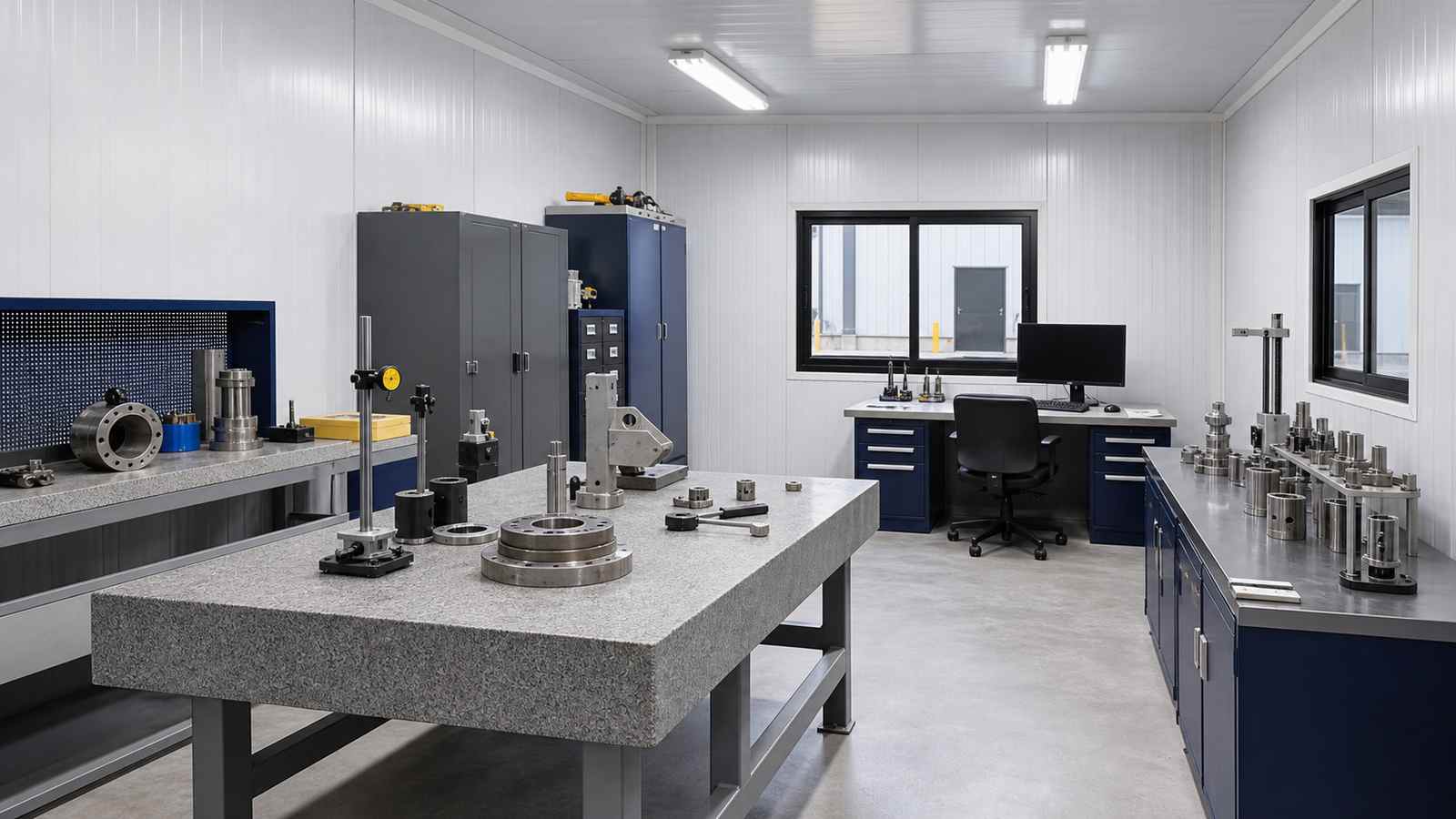
Project Background
Mining expansion projects depend on reliable access to replacement parts, tools and maintenance services. At this remote site, long transport distances could increase equipment downtime when critical components were unavailable. The project therefore required a facility that could be manufactured away from the mine, transported in coordinated shipments and installed quickly on prepared foundations.
Modular Facility Solution
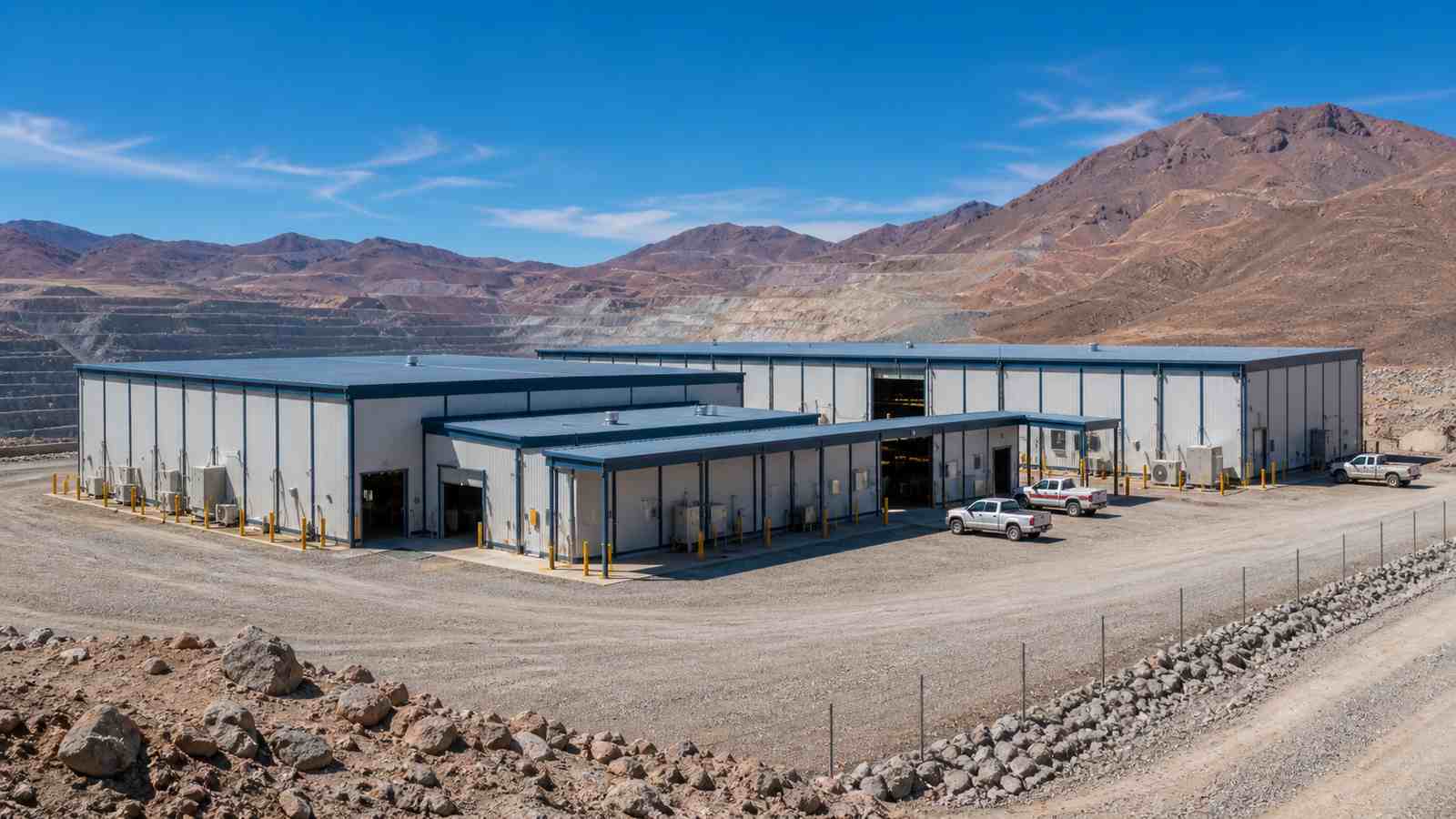
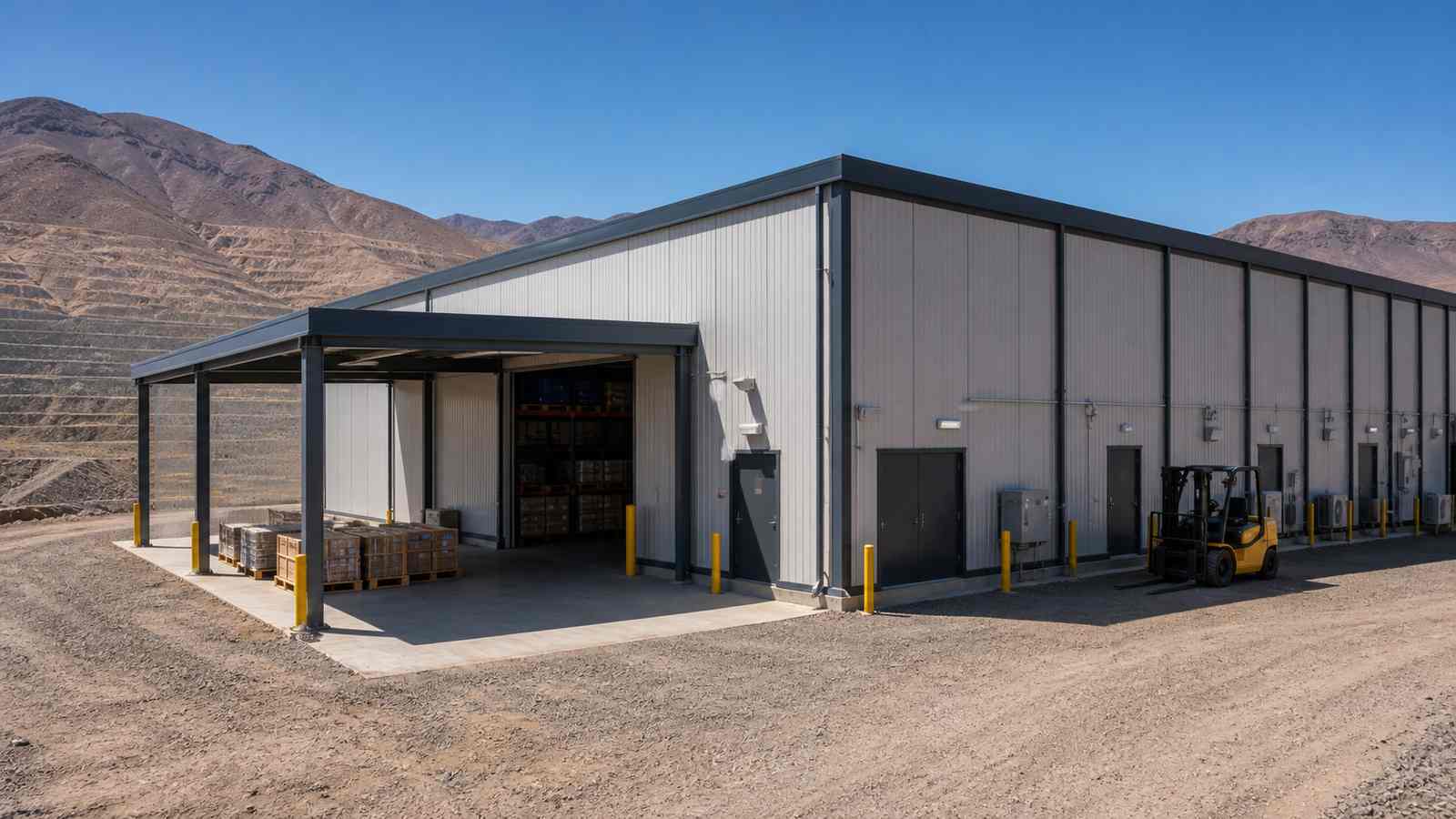
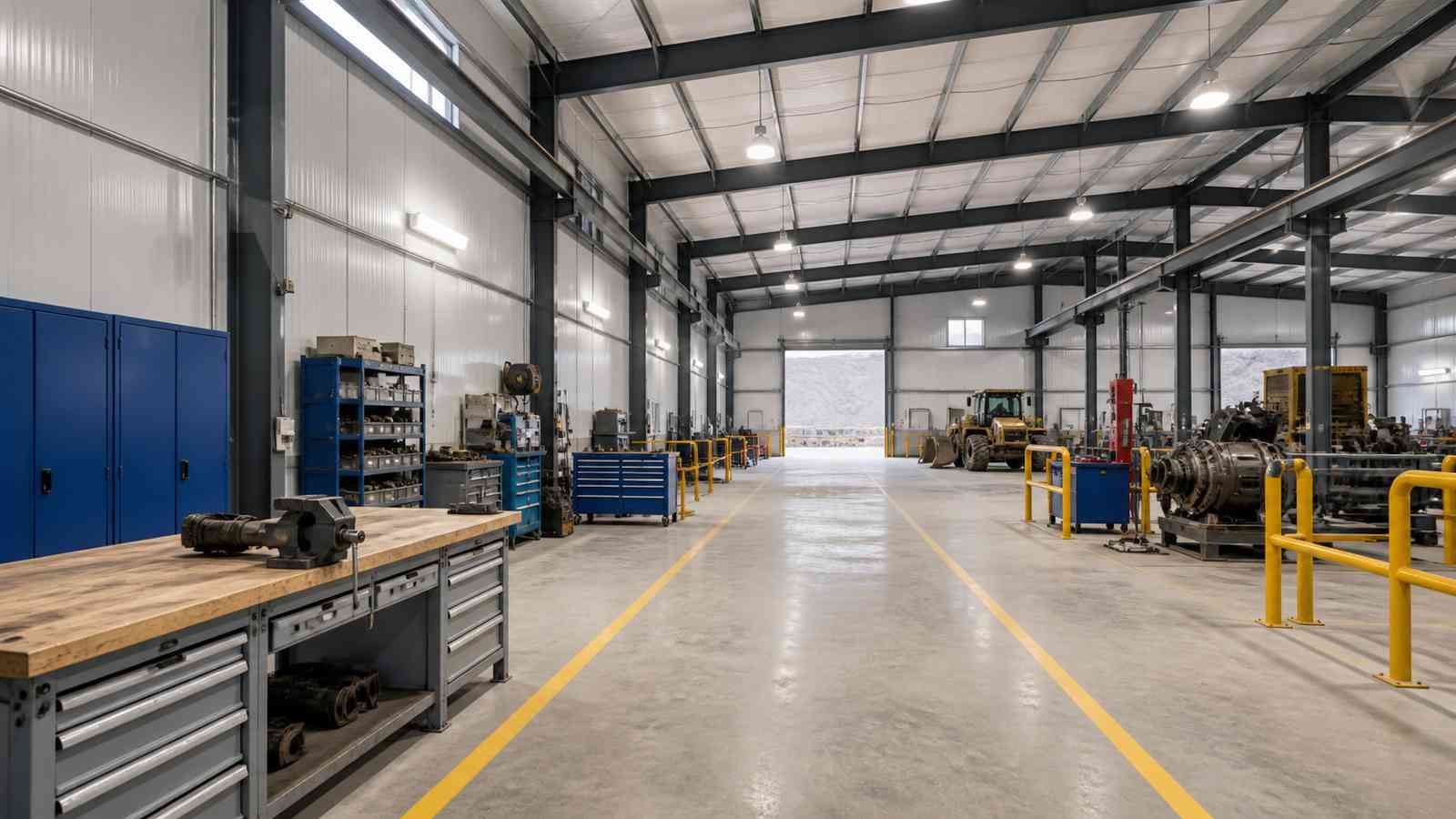
The illustrative solution combines a modular spare-parts warehouse, a maintenance workshop, a covered service apron and an engineering coordination office. The warehouse layout uses clearly separated storage aisles and dedicated receiving areas for pumps, hoses, fittings and boxed components. The workshop provides practical workbenches, tool storage and task lighting for routine servicing of industrial equipment.
The office module supports maintenance planning, shift coordination and document control. Covered connections between functional areas help protect workers and materials from strong sunlight and dust while maintaining safe circulation across the compound.
Engineering for Desert Mining Conditions
The buildings use galvanized structural steel and insulated wall and roof panels selected for dry, high-radiation conditions. Light-colored exterior finishes reduce solar heat gain, while sealed openings and filtered ventilation help limit dust entry. External HVAC equipment is positioned for service access without obstructing pedestrian routes.
The modular design allows much of the electrical work, interior finishing, shelving preparation and building-services installation to be completed before delivery. On site, the modules can be placed by crane on prepared foundations and connected in a controlled sequence, helping reduce exposure hours in an active mining environment.
Project Value
The modular approach can shorten the period between site preparation and operational use, improve factory-level quality control and reduce the number of construction activities performed at the mine. The facility also gives the operator a more organized maintenance workflow and faster access to essential spare parts. If mine requirements change, selected modules can be expanded, reconfigured or relocated.
FAQ
1. Why are modular workshops suitable for remote mining projects?
Modular workshops can be manufactured while foundations and utility connections are prepared on site. This parallel process reduces weather and logistics exposure, limits the number of site trades required and supports faster commissioning in remote areas.
2. Can the warehouse layout be customized for different mining spare parts?
Yes. Shelving capacity, pallet zones, secure stores, receiving areas and parts counters can be configured around the size, weight and handling requirements of the operator’s inventory.
3. How are modular buildings protected from desert heat and dust?
Typical measures include insulated wall and roof panels, reflective exterior finishes, sealed doors and windows, filtered ventilation and appropriately sized HVAC systems. Final specifications should be based on local climate data and the intended operating conditions.
4. Can workshop utilities be installed before delivery?
Electrical distribution, lighting, ventilation, compressed-air provisions and selected equipment connections can be pre-installed in the factory. Final connections and testing are completed after the modules are installed on site.
5. Can the facility be expanded in the future?
Yes. A standardized modular layout can reserve connection points for additional storage, office or workshop units, allowing the facility to grow as production and maintenance requirements change.