Modular Mineral Exploration Camp Completed in the Pilbara
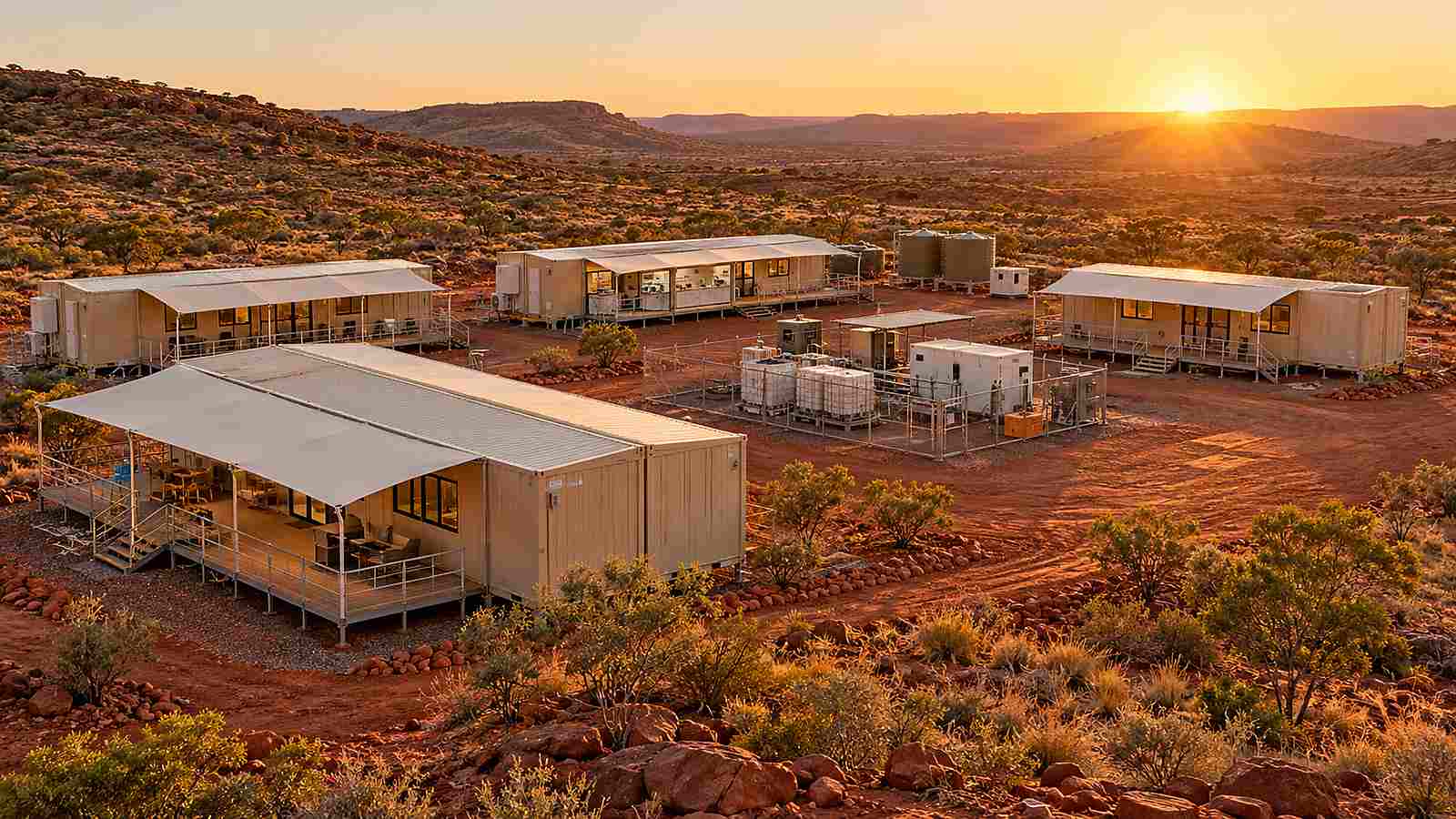
Photo Gallery
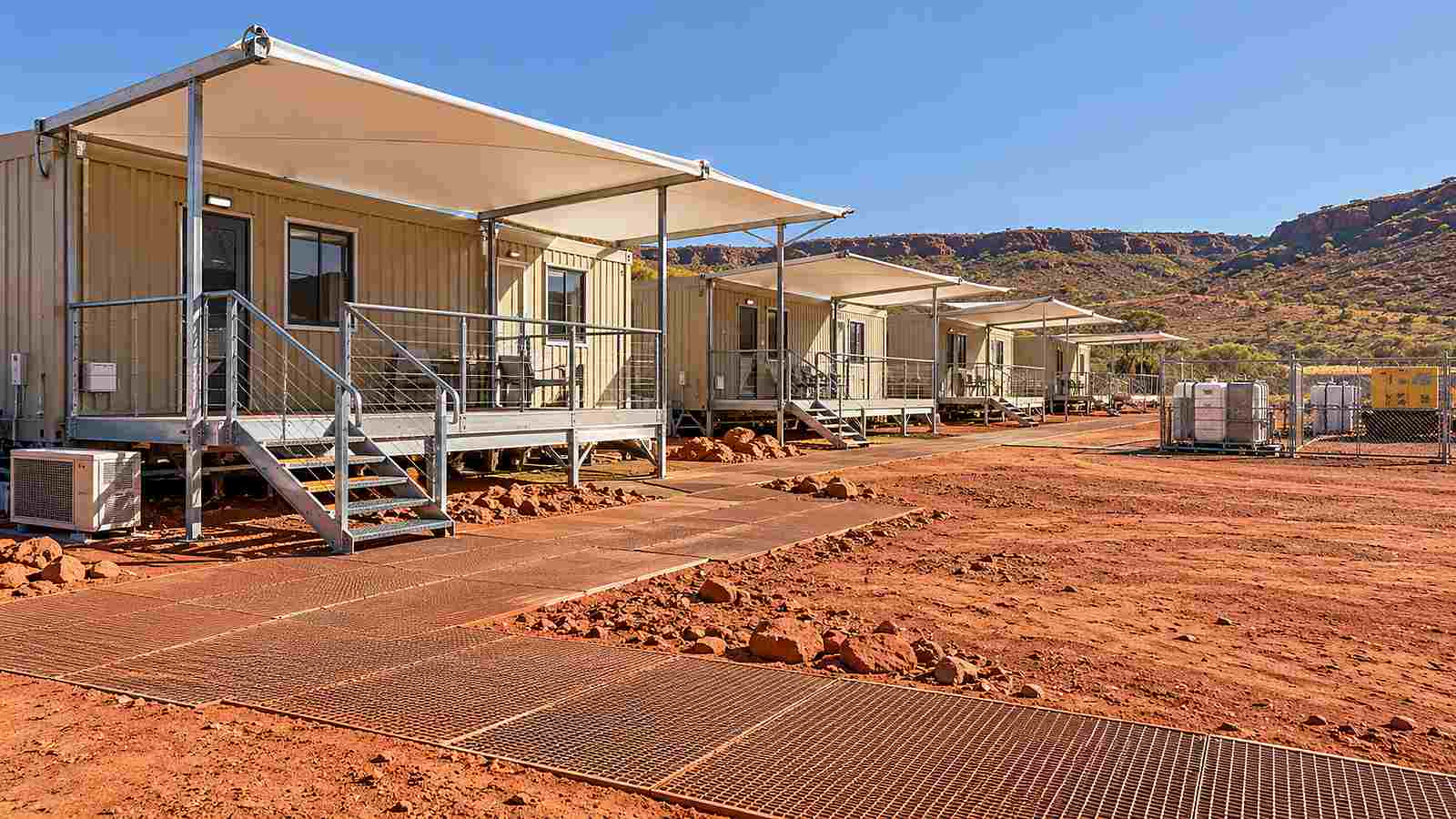
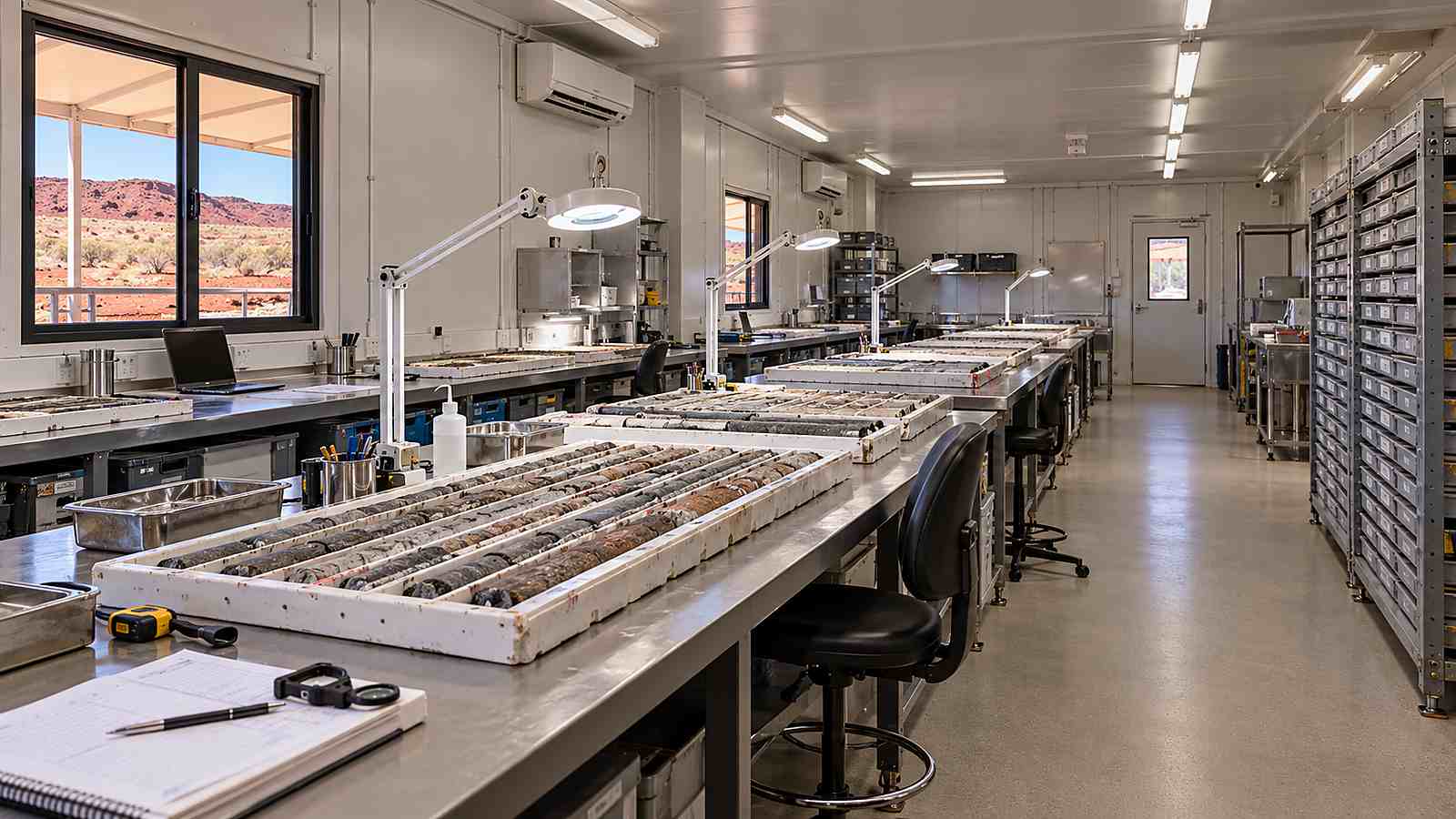
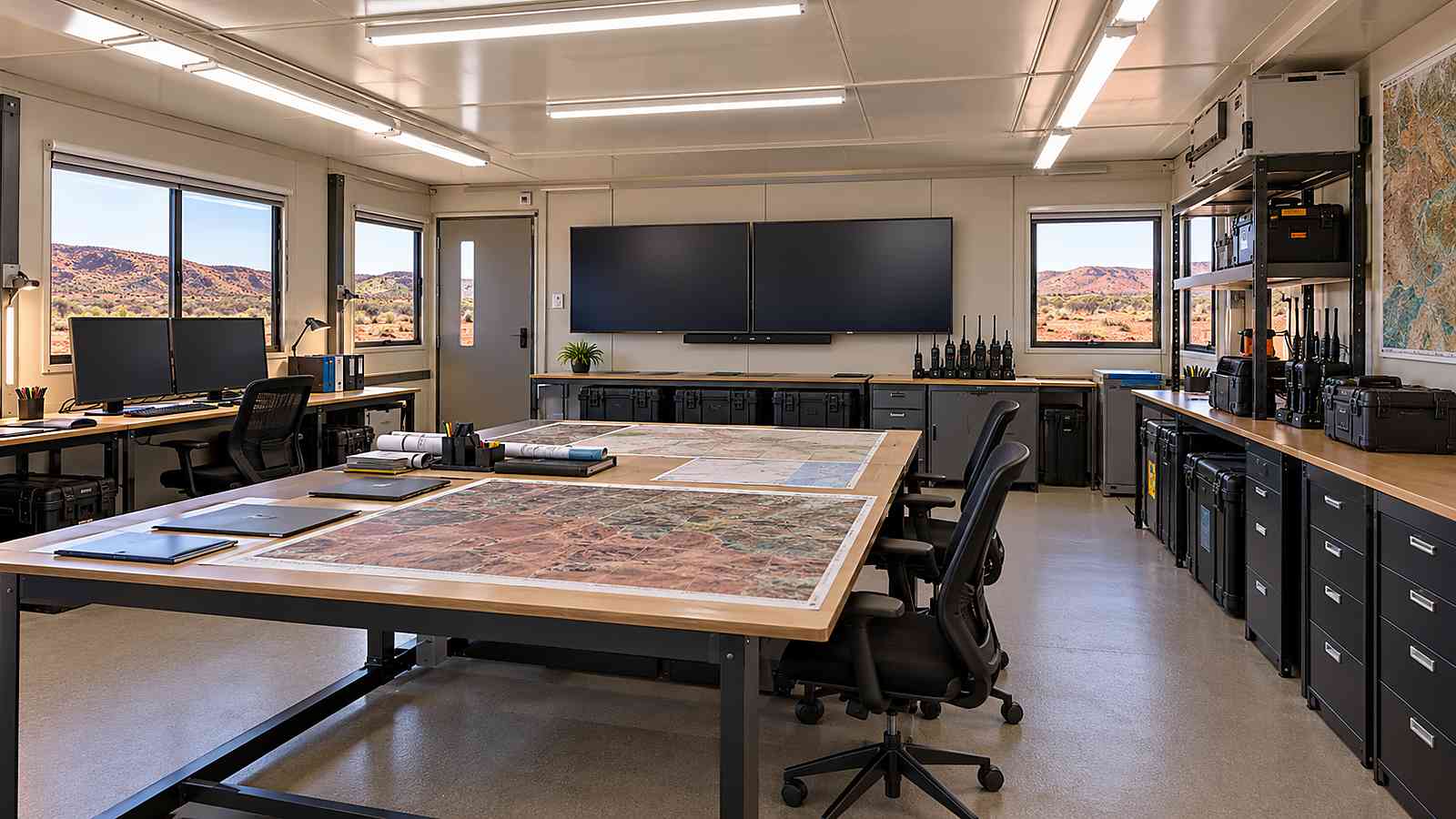
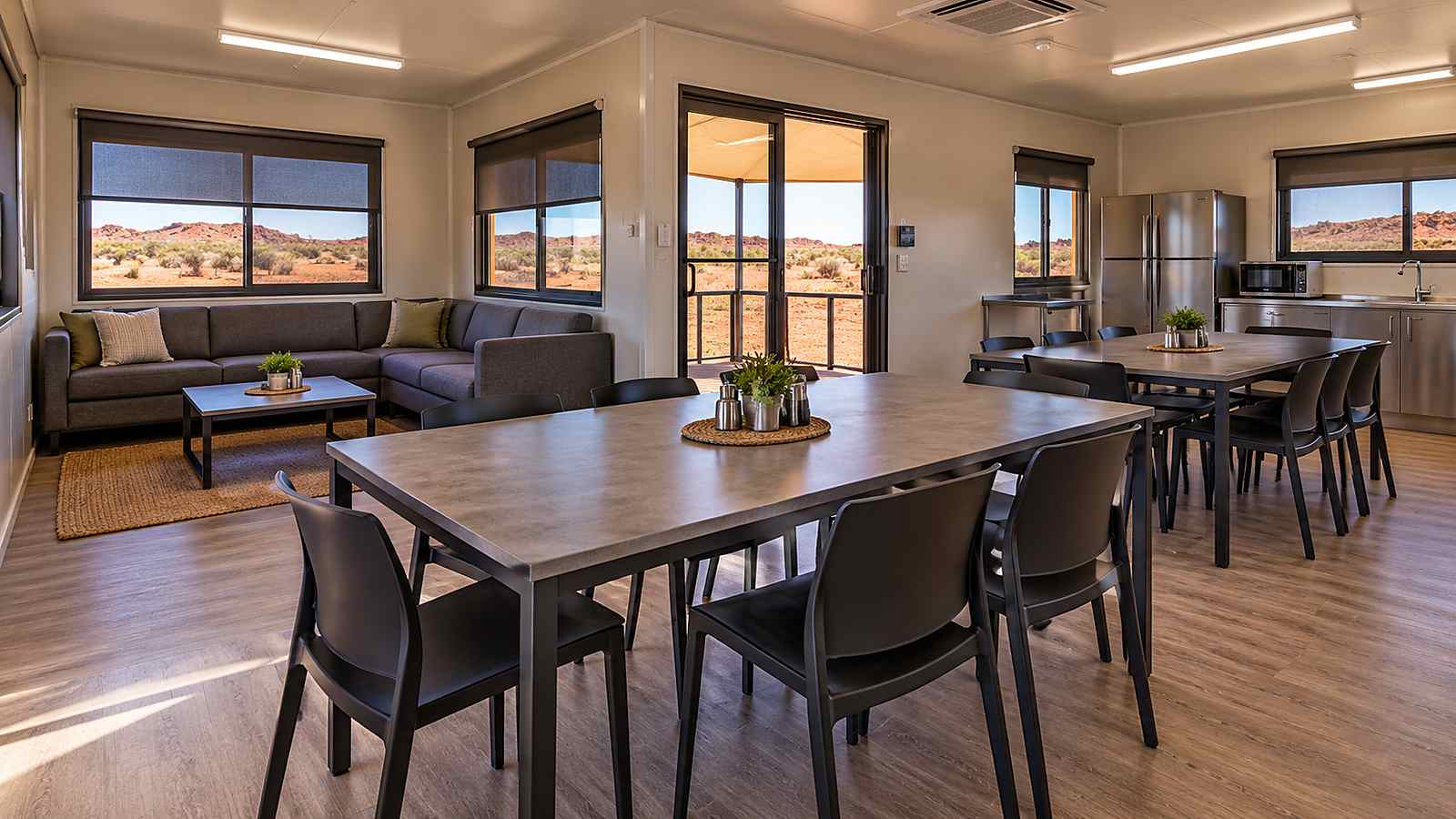
Completed in October 2026, this modular project in Pilbara, Western Australia was delivered around a specific operating workflow rather than a repeated room template. The completed camp combines sample logging, a field laboratory, operations mapping, accommodation and crew recovery around a compact dust-managed yard. Dirty sample movement stays outside the clean dining and sleeping route.
From Core Tray to Field Decision
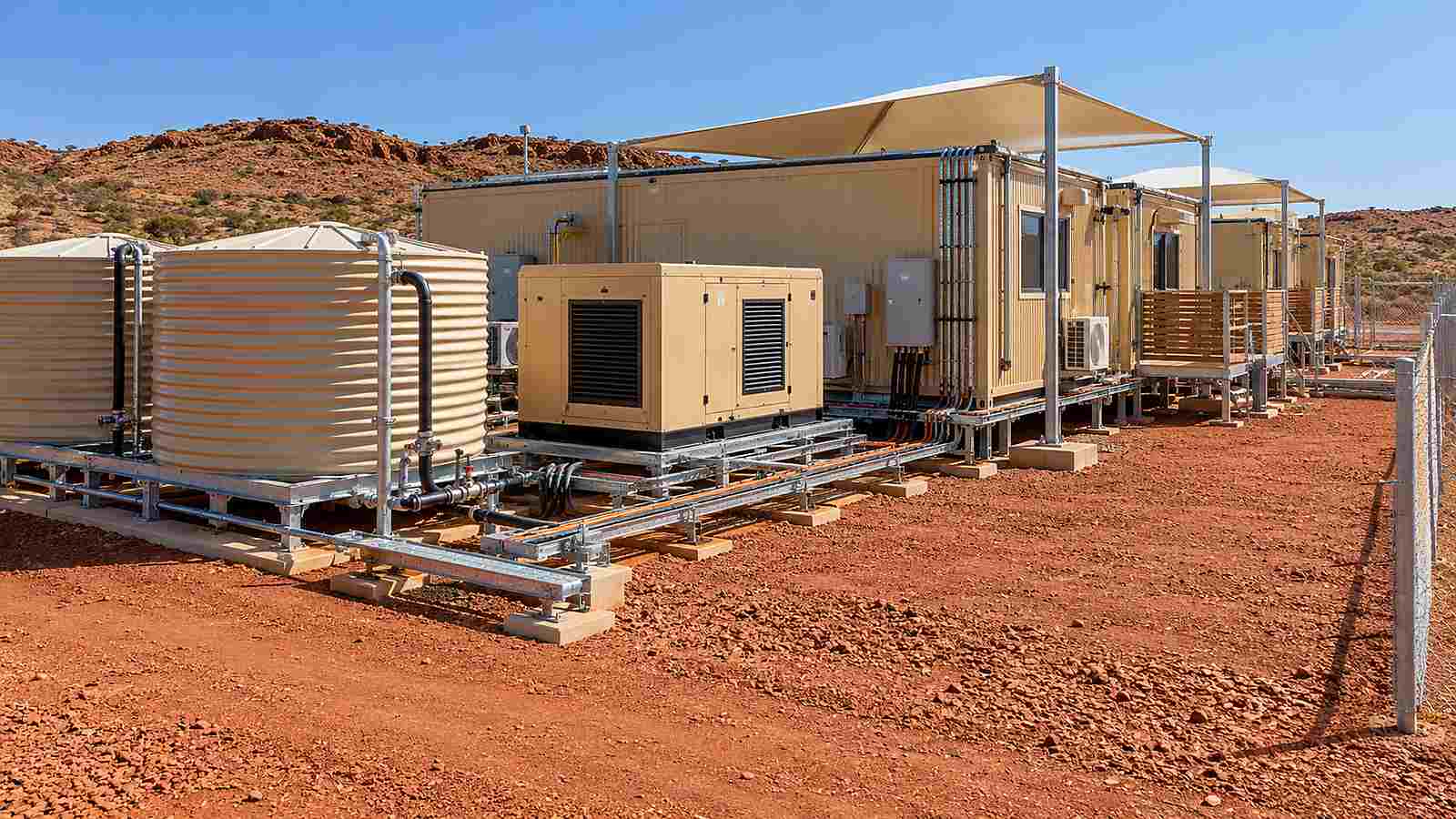
Deep canopies, entry grating and sealed finishes reduce red-dust transfer. Water, power and communications equipment sit on service skids at the rear, with protected cable routes and enough clearance for routine maintenance.
Dust Control and Remote Utilities
Unlike a generic accommodation camp, the layout is organized around the geological sample journey. Core trays move from receiving to logging and storage without entering the operations room, while mapping staff retain direct oversight of field communications.
Structural openings, primary service routes, lifting points and module junctions were resolved before interior close-up. Factory records covered concealed work, penetration sealing, dimensions and transport protection.
Camp Handover by Function
Foundations, utility entries and crane positions were checked before delivery. Modules were placed in operating sequence, connections and weather seals were completed, and specialist rooms were tested against their intended function rather than accepted only on visual finish.
Compliance and Project Record
The ICC/MBI off-site standards programme is a useful reference for dividing factory and site responsibilities where adopted. Final structural, fire, accessibility, energy and operational approvals remain subject to the local authority and appointed professionals.
- Room data and specialist equipment were coordinated before production.
- Factory and site inspection evidence was consolidated for handover.
- Transport, lifting, connections and commissioning had named responsibilities.
Related ZH-ENG Solution
Explore ZH-ENG modular building solutions for manufacturing, logistics and delivery coordination matched to the project type.
Sources
Project source: linson.
Technical reference: International Code Council and Modular Building Institute — Off-Site Construction Standards — https://www.iccsafe.org/products-and-services/standards/is-osmc/