California Expands Modular Housing Manufacturing Capacity as Off-Site Construction Continues to Grow
Axios
Q1: Why Are More Companies Expanding Their Modular Housing Manufacturing Capacity?
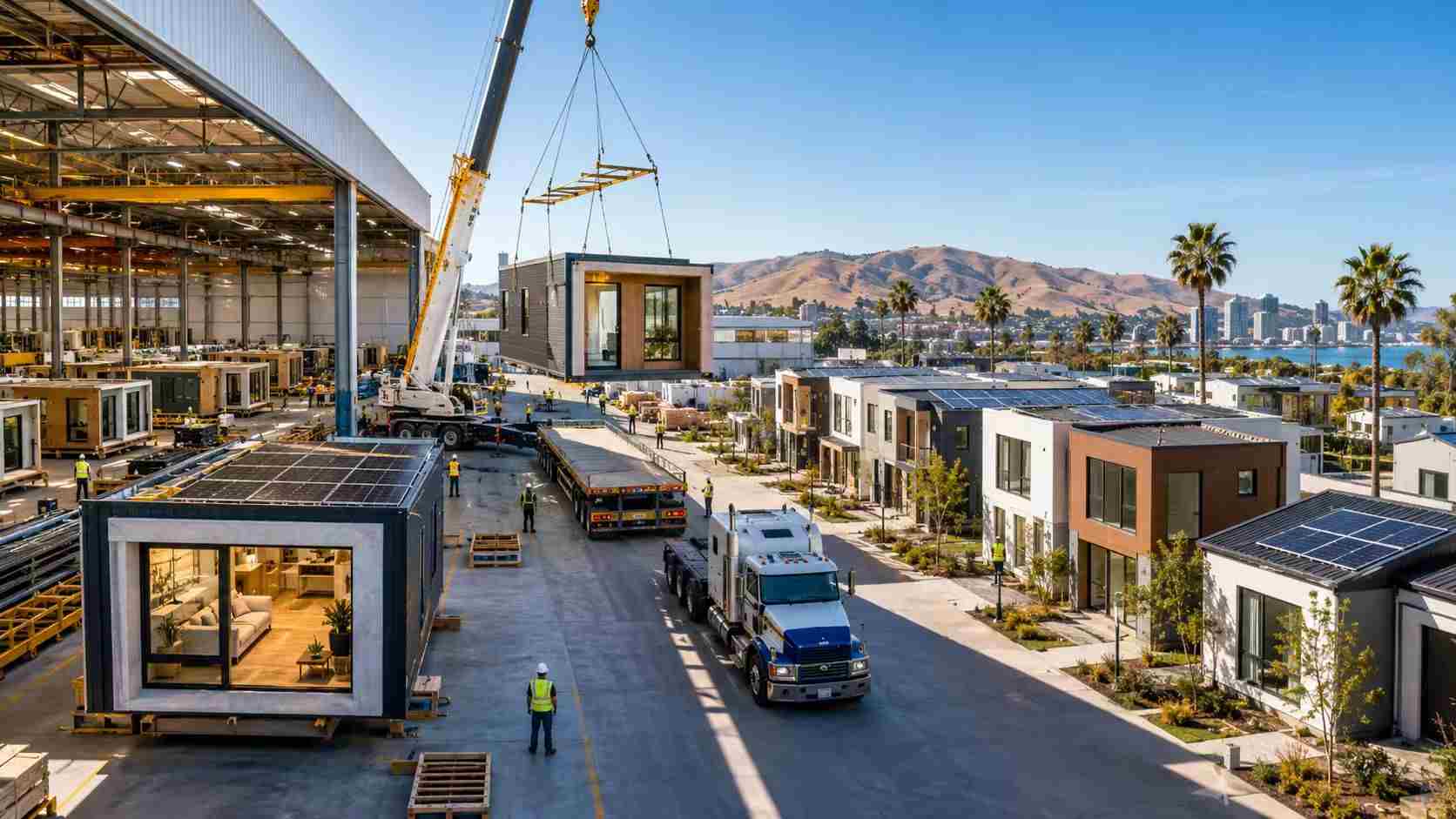
In recent years, housing shortages, rising construction costs, and a shortage of skilled labor have encouraged more construction companies to adopt factory-based manufacturing.
Expanding manufacturing capacity can help:
Improve production efficiency;
Shorten project delivery timelines;
Meet growing demand for large-scale housing developments;
Enhance product consistency and quality;
Support green manufacturing and energy-efficient building practices.
Q2: What Are the Advantages of Factory-Based Manufacturing?
Compared with traditional on-site construction, factory-based manufacturing offers several key advantages:
A more stable and controlled production environment;
Easier implementation of quality management systems;
Higher material utilization and reduced waste;
Less impact from weather conditions;
Improved workplace safety;
Greater suitability for large-scale and standardized production.
Q3: What New Requirements Is the International Market Placing on Modular Construction?
As governments continue to promote housing development and sustainable construction, international buyers are paying increasing attention to:
Compliance with local building codes and regulations;
Energy efficiency and thermal insulation performance;
International certifications and standards;
Fast production and delivery capabilities;
Factory quality management systems;
Sustainable manufacturing practices.
These factors are becoming increasingly important in global procurement decisions.
Q4: What Are the Key Development Trends for the Modular Construction Industry?
Over the next few years, the industry is expected to focus on:
Automated manufacturing;
Digital design technologies, including Building Information Modeling (BIM);
Smart manufacturing and intelligent production systems;
Green and low-carbon building solutions;
Higher levels of international standardization;
Greater collaboration across the global supply chain.
As construction continues to become more industrialized, modular buildings are expected to see wider applications in residential housing, education, healthcare, hospitality, commercial buildings, and public infrastructure.