What Insulation Is Used in Modular Buildings? Choosing the Right Insulation System
International Code Council (ICC)
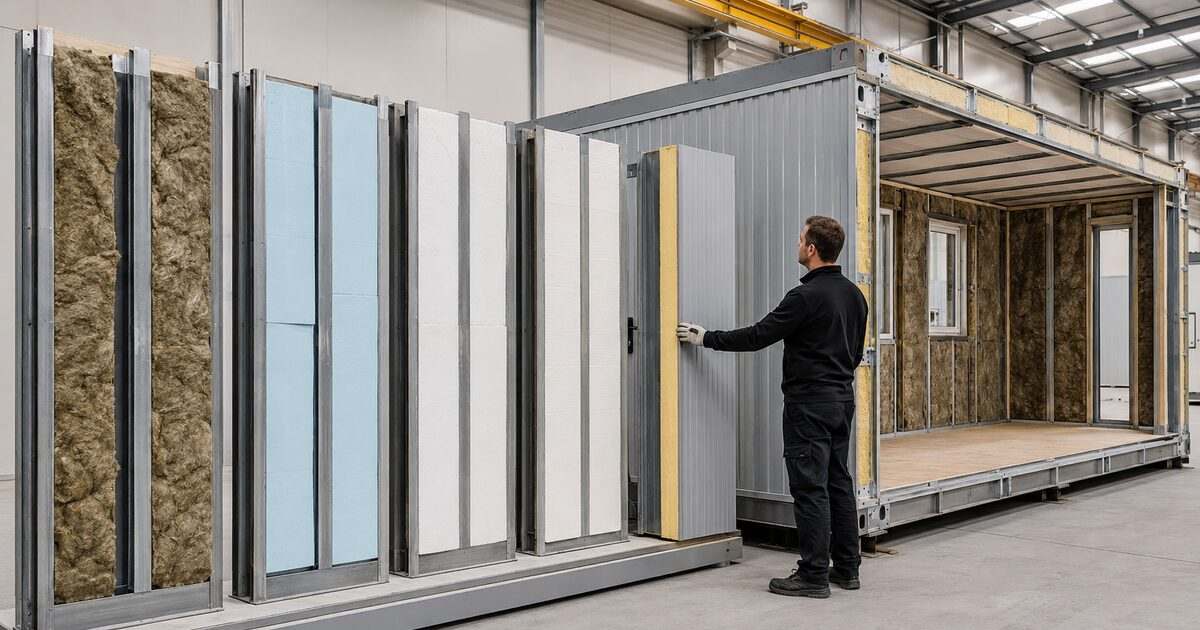
Several insulation materials are commonly used in modular buildings, each offering different performance characteristics.
Rock Wool
Rock wool provides thermal insulation, sound absorption, and good fire resistance, making it suitable for many commercial and industrial applications.
Glass Wool
Glass wool is lightweight and offers effective thermal and acoustic insulation for walls, roofs, and ceiling systems.
PIR Insulation
Polyisocyanurate (PIR) insulation provides high thermal performance, allowing designers to achieve effective insulation with relatively thin panels.
PUR Insulation
Polyurethane (PUR) insulation is valued for its low thermal conductivity and is used in various building envelope applications.
Selecting an Insulation System
The choice of insulation should consider:
- Local climate;
- Building function;
- Energy-efficiency requirements;
- Fire performance;
- Moisture resistance;
- Acoustic performance;
- Long-term maintenance needs.
Frequently Asked Questions (FAQ)
Q1: Which insulation material is best for modular buildings?
There is no universal best option. The appropriate insulation depends on the project's climate, performance goals, fire requirements, building use, and applicable regulations.
Q2: Why is insulation important in modular construction?
Insulation helps improve thermal efficiency, supports indoor comfort, contributes to energy conservation, and can also enhance acoustic and fire performance depending on the material used.
Q3: What do international buyers usually evaluate?
International buyers commonly evaluate thermal performance, fire classification, moisture resistance, acoustic properties, durability, environmental performance, and compliance with applicable building standards.
Q4: Can different insulation materials be combined?
Yes. In some projects, different insulation materials may be combined within the building envelope to meet specific thermal, acoustic, moisture, or fire-performance objectives, subject to engineering design and local code requirements.