How Are Modular Buildings Transported from the Factory to the Project Site?
Modular Building Institute (MBI)
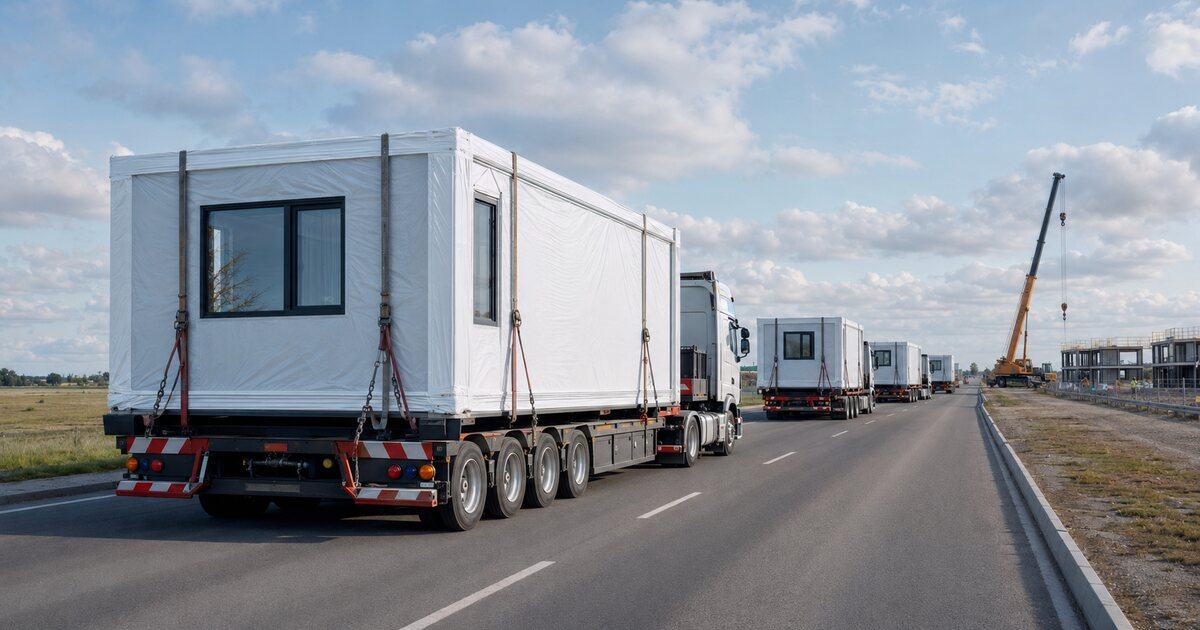
Module transportation usually begins after factory production and final quality inspections have been completed. Before shipment, project teams evaluate transportation requirements based on module size, weight, destination, and local regulations.
Important considerations include:
Compliance with road transport regulations;
Oversized or overweight transport permits where required;
Route planning for bridges, tunnels, and turning radii;
Protection against movement, vibration, and weather during transport;
Coordination between delivery schedules and crane installation;
Temporary storage and on-site logistics management.
Well-planned transportation helps reduce project risks and supports efficient installation once the modules arrive on site.
Frequently Asked Questions (FAQ)
Q1: How are modular buildings transported?
Most modules are transported by truck, trailer, rail, or ship, depending on their size, weight, destination, and available infrastructure.
Q2: Do all modules require oversized transport permits?
Not always. Permit requirements depend on module dimensions, transport weight, and the regulations of the country or region where the project is located.
Q3: What factors do international buyers usually evaluate?
International buyers commonly evaluate transportation planning, route feasibility, packaging and protection methods, lifting points, logistics coordination, delivery schedules, and the supplier's experience with international shipments.
Q4: Why is transportation planning important?
Effective transportation planning helps reduce delivery risks, protect module quality, avoid project delays, and improve the overall efficiency of modular construction projects.