FAT vs SAT: What's the Difference in Modular Construction Projects?
International Society of Automation (ISA)
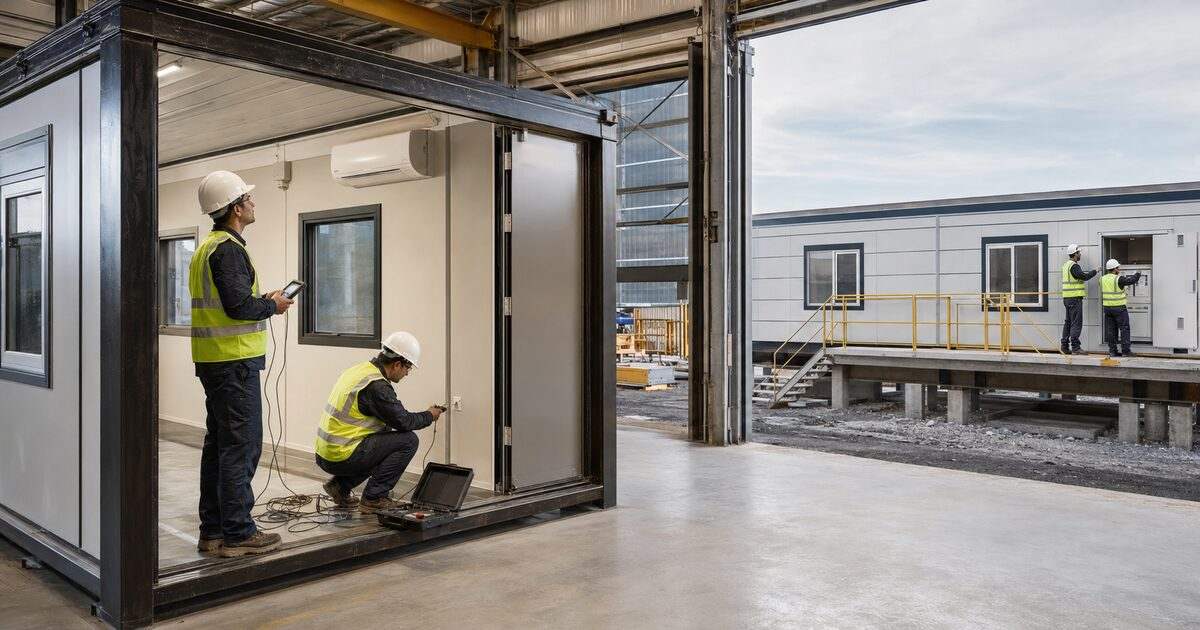
FAT is conducted at the manufacturing facility before shipment to verify that the modular building has been produced according to engineering specifications and contractual requirements.
Typical FAT activities include:
- Dimensional and visual inspections;
- Structural quality checks;
- Door and window inspections;
- Building envelope verification;
- Electrical function testing;
- Plumbing inspections;
- HVAC operational checks;
- Review of quality documentation.
Site Acceptance Test (SAT)
SAT takes place after transportation, installation, and system integration at the project site. It verifies that the building performs as expected under actual operating conditions.
Typical SAT activities include:
- Module connection inspections;
- Joint sealing and weatherproofing checks;
- Electrical commissioning;
- Plumbing system testing;
- HVAC system performance verification;
- Fire protection and alarm testing;
- Final operational acceptance.
Frequently Asked Questions (FAQ)
Q1: What is the main difference between FAT and SAT?
FAT verifies manufacturing quality before shipment, while SAT verifies system performance after installation on site.
Q2: Is FAT enough to guarantee project quality?
No. FAT confirms factory manufacturing quality, but SAT is also important because transportation, lifting, installation, and on-site connections can affect final project performance.
Q3: What do international buyers usually evaluate?
International buyers commonly review FAT procedures, SAT reports, inspection records, commissioning results, quality documentation, corrective actions, and compliance with project specifications.
Q4: Why are both FAT and SAT important?
Together they provide quality verification at different project stages, helping reduce commissioning risks, improve project reliability, and support a smoother final handover.