What Is BIM and Why Is It Transforming Modular Construction?
buildingSMART International
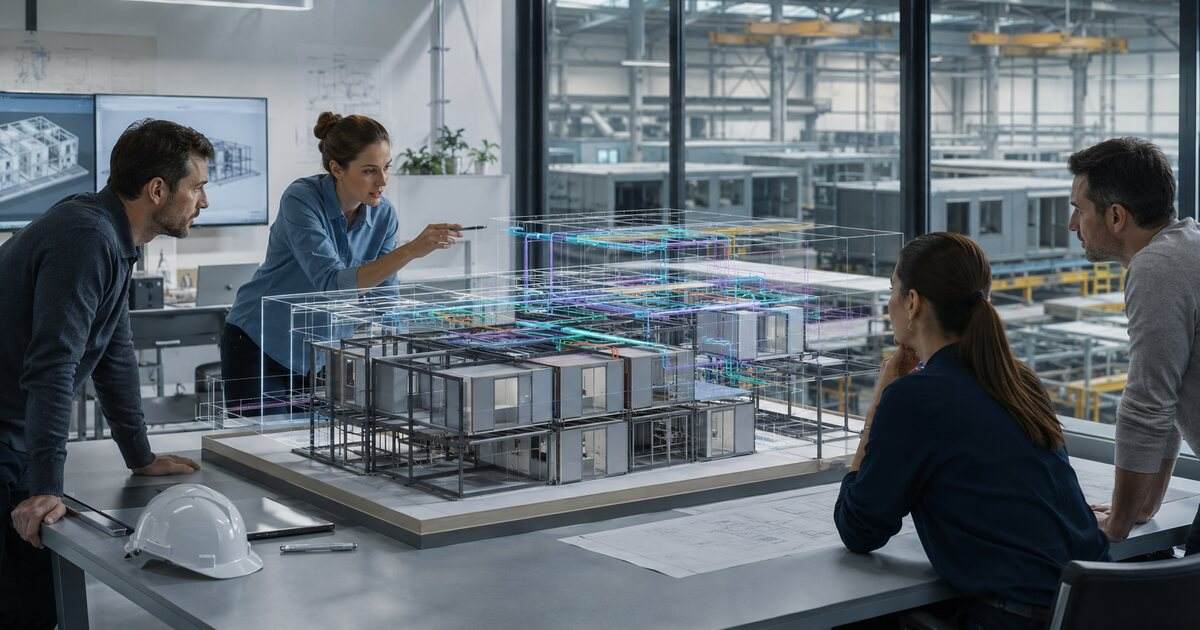
Unlike traditional 2D drawings, BIM creates an intelligent digital model that integrates architectural, structural, and MEP information into a single platform.
In modular construction, BIM is commonly used to:
Develop accurate 3D building models;
Detect clashes between structural and MEP systems;
Optimize module dimensions and transportation planning;
Support factory production scheduling and material management;
Plan lifting sequences and site installation;
Provide digital information for facility operation and maintenance.
By enabling all project participants to work from the same digital model, BIM improves collaboration, reduces errors, and supports more efficient project delivery.
Frequently Asked Questions (FAQ)
Q1: What is BIM?
Building Information Modeling (BIM) is a digital process that creates and manages intelligent 3D models containing engineering and project information.
Q2: Why is BIM important for modular construction?
BIM improves design accuracy, enhances coordination between disciplines, supports factory manufacturing, and reduces installation risks.
Q3: How is BIM used in modular building projects?
It is used for 3D design, clash detection, production planning, logistics coordination, installation sequencing, and lifecycle information management.
Q4: What do international buyers usually evaluate?
International buyers typically assess BIM capabilities, coordination efficiency, model accuracy, engineering integration, digital collaboration workflows, and the supplier's ability to support project execution through BIM-based processes.